Monthly Strategies for the Underdog Clinician
This is Vol 14 of The Underrated Dispatch.
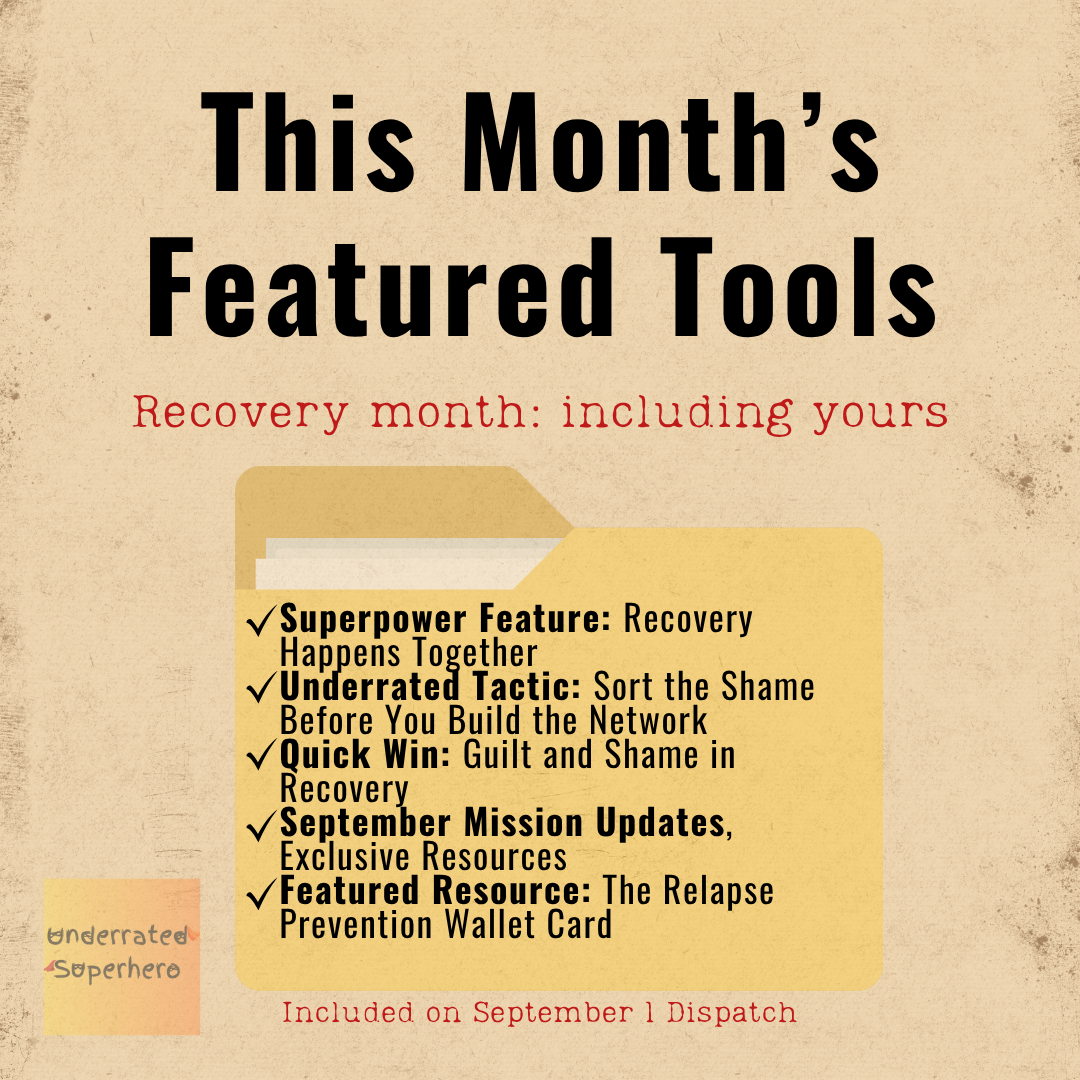
FEATURED HIGHLIGHT: Recovery Happens Together
September is National Recovery Month. This year’s theme is “Recovery Happens Together,” and the framing behind it is that human connection is what sustains resilience and long-term recovery.
That’s accurate. It’s also the hardest part of the work to build, because the clients who need connection most are usually the ones least able to reach for it. The ones who isolate hardest aren’t the ones who don’t want people. They’re the ones who’ve decided they don’t deserve any.
That’s the thread running through this issue.


FEATURED RESOURCE — The Relapse Prevention Wallet Card
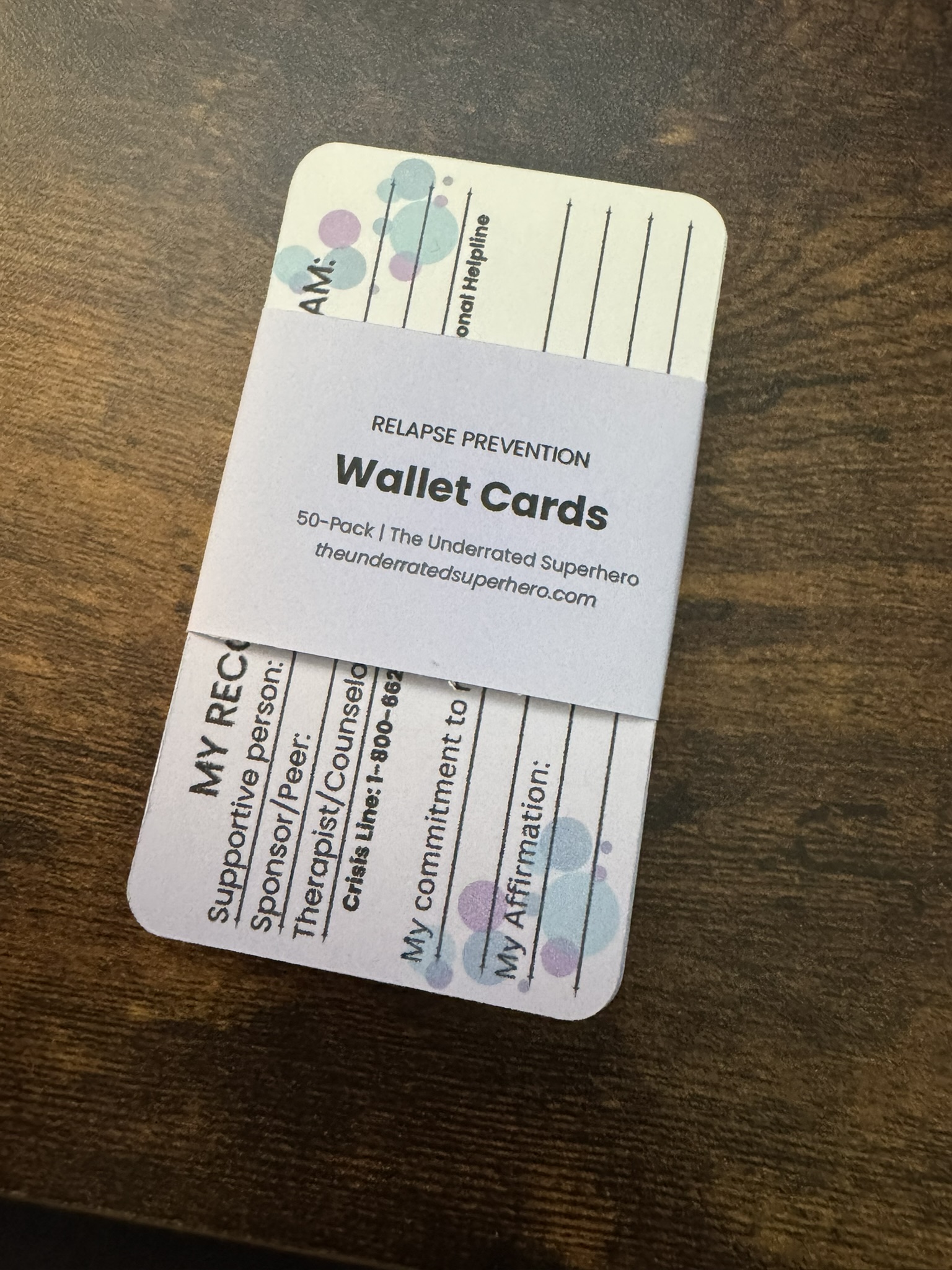
Most relapse prevention plans live in a binder the client never opens again. This one is 3.5 by 2 inches and lives in a wallet.
One side is pre-printed: five early warning signs, the HALT check, the SAMHSA helpline, and the line that does the most work on the card: a slip doesn’t have to become a relapse, ask for help now. The other side is blank for the client to fill in. Three support contacts with phone numbers. A commitment statement in their own words. An affirmation they actually chose.
It’s unlaminated 110lb cardstock, so they write on it with whatever pen is nearby, in session, with you. Rounded corners because a card that lives in a wallet takes a beating. No app, no battery, no signal required.
The fill-in side is the reason it’s here this month. Three names and three numbers is a support network the client can produce under stress, which is the only time it matters. If you’re running Recovery Month groups, this is a completed take-home in about ten minutes.
Two color options with identical content. A soft teal and purple, or the bold orange harm reduction version. Wholesale pricing is available on orders of 50 or more if you’re distributing to a caseload or a program.
A note on how access works: Membership gives you the full Resource Library. The shop is separate. Those are individual products, and members get a discount on them. Two different things, and worth saying plainly so nobody has to guess.
Members get 20% off shop products.
Important September Updates
🟣 IT’S RECOVERY MONTH — AND SUICIDE PREVENTION AWARENESS MONTH
This year’s Recovery Month theme is connection: recovery holds because people hold it. True, and harder than it sounds. The clients who isolate hardest aren’t the ones who don’t want people — they’re the ones who decided they don’t deserve any. World Suicide Prevention Day is September 10.
🛠️ THIS ISSUE IS BUILT AROUND THAT WORK
Sorting shame from guilt before you build a support network — because a client convinced they aren’t worth reaching for won’t reach. The Quick Win, the featured resource, and this month’s tactic all point at the same problem.
📋 THE INTERACTIVE BOARDS ARE BEING RETIRED
They were one of the least-used parts of the platform. That’s what the traffic showed, and continuing to pay for something almost nobody opened didn’t make sense. If you were one of the people who did use them, reply and tell me which ones — that changes what I do about the resources inside them.
📅 THE SURVIVAL SERIES IS MOVING TO BIWEEKLY
The series has been posted as weekly. I haven’t been publishing weekly, and pretending otherwise doesn’t serve anybody. Two posts a month is what I can hold alongside a full clinical caseload, so that’s what it is now. The arc continues and the posts don’t get shorter.
SEPTEMBER MISSION UPDATES
Here’s everything happening this month:
- New Clinician Series (9/7, 9/21) — Moved to biweekly
- AI In Clinical Practice (9/1, 9/15) – Post 6 and Post 7
- Monthly Content Drop (9/15)
- National Recovery Month — all September
- Suicide Prevention Awareness Month — all September
- World Suicide Prevention Day — 9/10
- SPEAKING: ICB FALL CONFERENCE
- I’ll be presenting “The Judgment You Can’t Outsource: Staying Accountable When the Tools Get Confident” at the ICB Fall Conference on October 21 in Springfield.
- It’s the question the AI series has been circling all year — what happens to clinical judgment when the tool sounds certain. If you’ll be there, find me.
THE SURVIVAL SERIES RETURNS: New Clinician Survival Series
Biweekly strategies that bridge theory and reality.
The authority arc — what happens when you stop being the newest person in the room and people start treating you like you know things.
What ran in August:
- “Have You Ever Used?” (8/2) — the question you’ll get asked, and the fact that no answer is neutral
COMING IN SEPTEMBER:

Blog #36 “They Know More Than I Do” (9/7) — when the person across from you has been doing this longer, and knows it
Blog #37 “It’s Not My Call” (9/21) — the decisions that aren’t yours, and what you owe them anyway
Biweekly from here. The authority arc runs into October.
BONUS SPECIAL — AI In Clinical Practice
The series is in its Recognition stage — seven posts about noticing what these tools actually do in clinical work, rather than arguing about whether to use them.
What ran in August:
- “It Feels Like Being Right” (8/1) — Recognition 1
- “It Folded. That Doesn’t Make You Right.” (8/15) — Recognition 2
Coming in August:
Post 6 “It Recommended the Safe Thing.” (9/1) — Recognition 3. A line I never wrote showed up in a clinical note, recommending the standard option after I’d explained why it wasn’t available. Why the most-documented answer arrives looking like the indicated one, and what that costs the clients furthest from the center.
Post 7 “Everyone Is Getting the Same Answer.” (9/15) — Recognition 4
Recognition runs seven posts at two per month, which puts the stage’s close in mid-November. If you’re joining now, the earlier posts stand on their own — start wherever.
Guilt Points. Shame Drowns.
Worksheet and infographic, in one download
Most clients carry both, and most can’t tell you which one they’re in. The difference isn’t academic: guilt points at a behavior and can be turned into action, while shame collapses into identity and takes the motivation to change with it. The Guilt vs. Shame Inventory gives clients a structured way to sort their own statements into one column or the other, then practice reframing the ones that have hardened. It comes with a clinician instruction page you keep — when to use it, how to introduce it, what to watch for, and when to put it down and do something else instead. The Guilt–Shame Cycle infographic is included in the same download. Free for all subscribers.
Download the Worksheet →UNDERRATED TACTIC: Sort the Shame Before You Build the Network
Recovery Month will hand you a lot of material about connection and support systems. Most of it assumes the client is able to accept support. Plenty of them aren’t, and it’s worth understanding why before you spend three sessions on a support network map that goes nowhere.
Shame isn’t only painful. It’s isolating in a specific, mechanical way. A client who believes they are the problem, not that they have one, has usually also concluded they don’t deserve anyone’s help. So they don’t call. They don’t show up. They decline the thing you spent the session building.
Which means the order matters. If you run the support system work first, you’re asking someone to reach for people while they’re still convinced they’re not worth reaching for. Sort the guilt from the shame first. Guilt can hold a support network. Shame can’t.
You’ll know which one you’re dealing with by what they write down. If every statement comes back identity-based, that’s not a worksheet problem. That’s the treatment plan telling you where to start.
PAIRS PERFECTLY WITH THIS MONTH’S QUICK WIN: : Guilt and Shame in Recovery
THIS MONTH’S RESOURCES – September Calendar Resources
Your home base for September. The month’s resources, awareness dates, and tools gathered in one place. Recovery Month and Suicide Prevention Awareness Month both run the full month, so the calendar carries more than usual this time. Bookmark it and check back as the month fills in.
Recovery happens together, and so does the work. If you’ve built something that helps, whether it’s a script, a form, or a way of running a group, someone else is out there reinventing it this week.
The Underrated Superhero Resource Hub has ready-to-use tools, templates, and clinical resources built by someone who still sits across from clients every week. Use them.
— The Underrated Superhero
Prefer to download and read later?
