Monthly Strategies for the Underdog Clinician
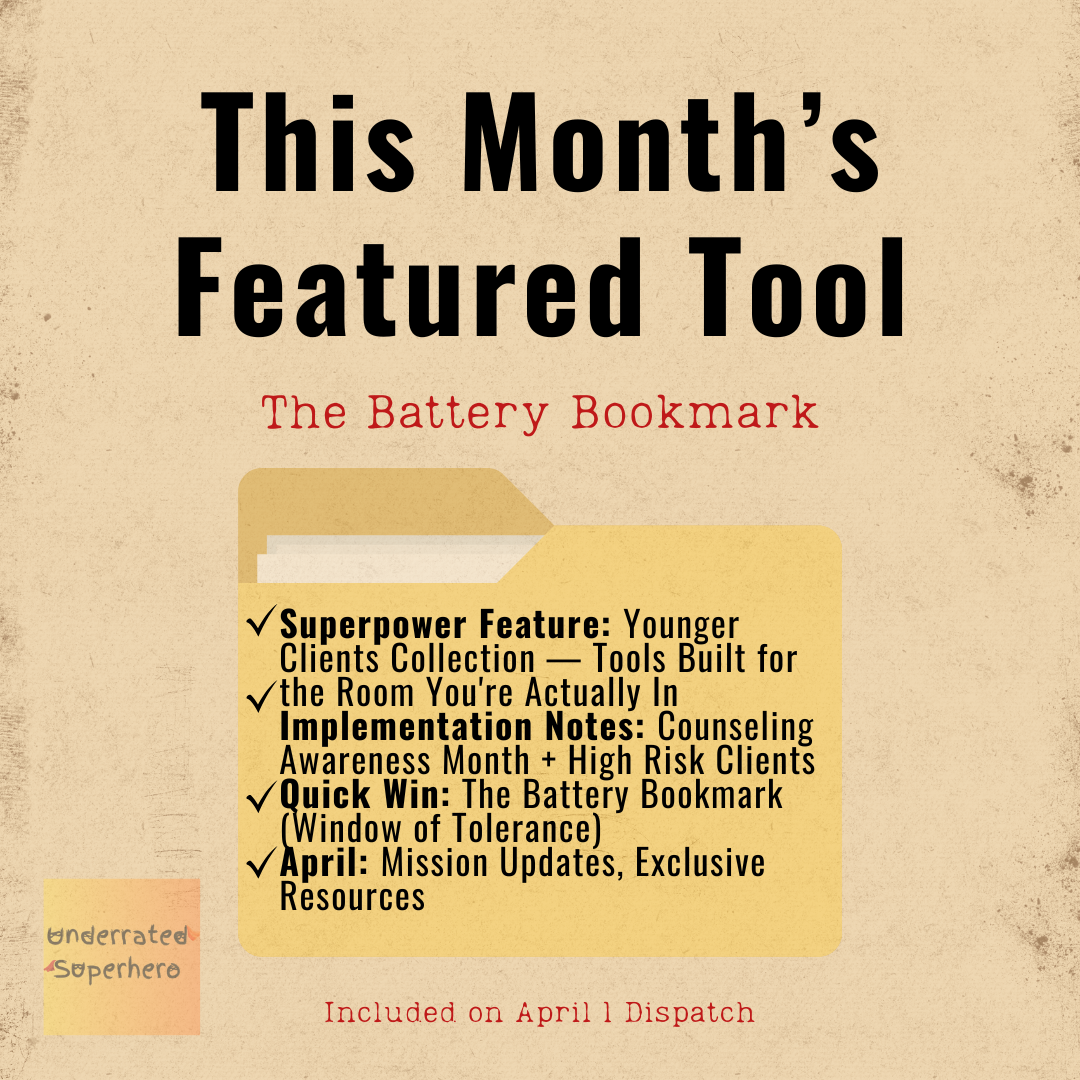
Featured Highlight: NEW — YOUNGER CLIENTS — TOOLS BUILT FOR THE ROOM YOU’RE ACTUALLY IN
Expanding into child, adolescent, and family work means your toolkit needs to expand too.
The Younger Clients collection is built for clinicians doing real work with younger clients and the families sitting across from them. Trauma-informed. Practical. Designed to travel home and actually get used.
You’ll find tools like a Window of Tolerance battery bookmark that makes regulation language accessible for a seven-year-old, a quick capture card adapted for child and family sessions, and a parent psychoeducation handout that answers the questions families bring into your waiting room before they even sit down.
Because the best tool is the one that makes it out of your office.
IMPORTANT APRIL UPDATES
Important April Updates
🌟 IT’S COUNSELING AWARENESS MONTH
April is Counseling Awareness Month — and Teal Day falls on April 10th. This month’s content honors the clinicians showing up for their clients every day, often without recognition, often without enough support. That’s exactly who this community is built for.
🍺 IT’S ALSO ALCOHOL AWARENESS MONTH
April is Alcohol Awareness Month — a time to raise awareness about alcohol use and the communities it touches. For many of you, this is core to the work you do every day. This month’s content and resources reflect that.
APRIL MISSION UPDATES
Here’s everything happening this month:
- Featured Board (4/1) – High Risk Individuals
- Monthly Content Drop (4/15)
- New Clinician Series (4/5; 4/12; 4/19; 4/26) — Four new posts this month
- Justice Involved Mastery Series (4/12) – 7th Article Release: Justice-Involved Treatment Series
Bonus Special: New Clinician Survival Series – Ongoing
Weekly strategies that bridge theory and reality
April’s series continues with the hardest conversation in clinical work — what happens when a client dies. Blog 25 drops April 5th. No framework prepares you for it. That’s exactly why we’re talking about it.
Recent Posts You May Have Missed:
- “Nobody Respects What We Do” — The cost of being essential and invisible

- “My Client Scares Me, Part 1” — When the fear has nothing to do with your skills

- “My Client Scares Me, Part 2” — The high-stakes client

- “My Client Scares Me, Part 3” — Fear of what they show you
Coming in April:
- “My Client Died: When the Loss Belongs to You Too” (4/5) — Some losses don’t come with a bereavement day. Nobody trains you for what happens after.
- Plus three more posts dropping 4/12, 4/19, and 4/26.
What Makes This Series Different:
Unlike generic “new professional” advice, this series specifically addresses the unique challenges of behavioral health work. Each post includes the uncomfortable thought, why it happens, what to do about it, and tools you can use immediately—decision trees, scripts, and reflection prompts.
Follow along: New posts drop every Sunday.

FEATURED BOARD: High Risk Individuals
High-risk clients require a different kind of clinical presence. Higher stakes. Tighter documentation. More complex decision-making under pressure — often with limited supervision and limited time.
This interactive board provides frameworks, tools, and strategies specifically designed for clinicians working with clients at elevated risk — whether that’s suicidality, overdose, domestic violence, or the intersection of all three.
Perfect For:
- Clinicians carrying high-acuity caseloads
- New counselors navigating their first high-risk client
- Anyone managing crisis intervention in under-resourced settings
- Clinicians who want a framework that holds up under pressure
QUICK WIN TOOL OF THE MONTH
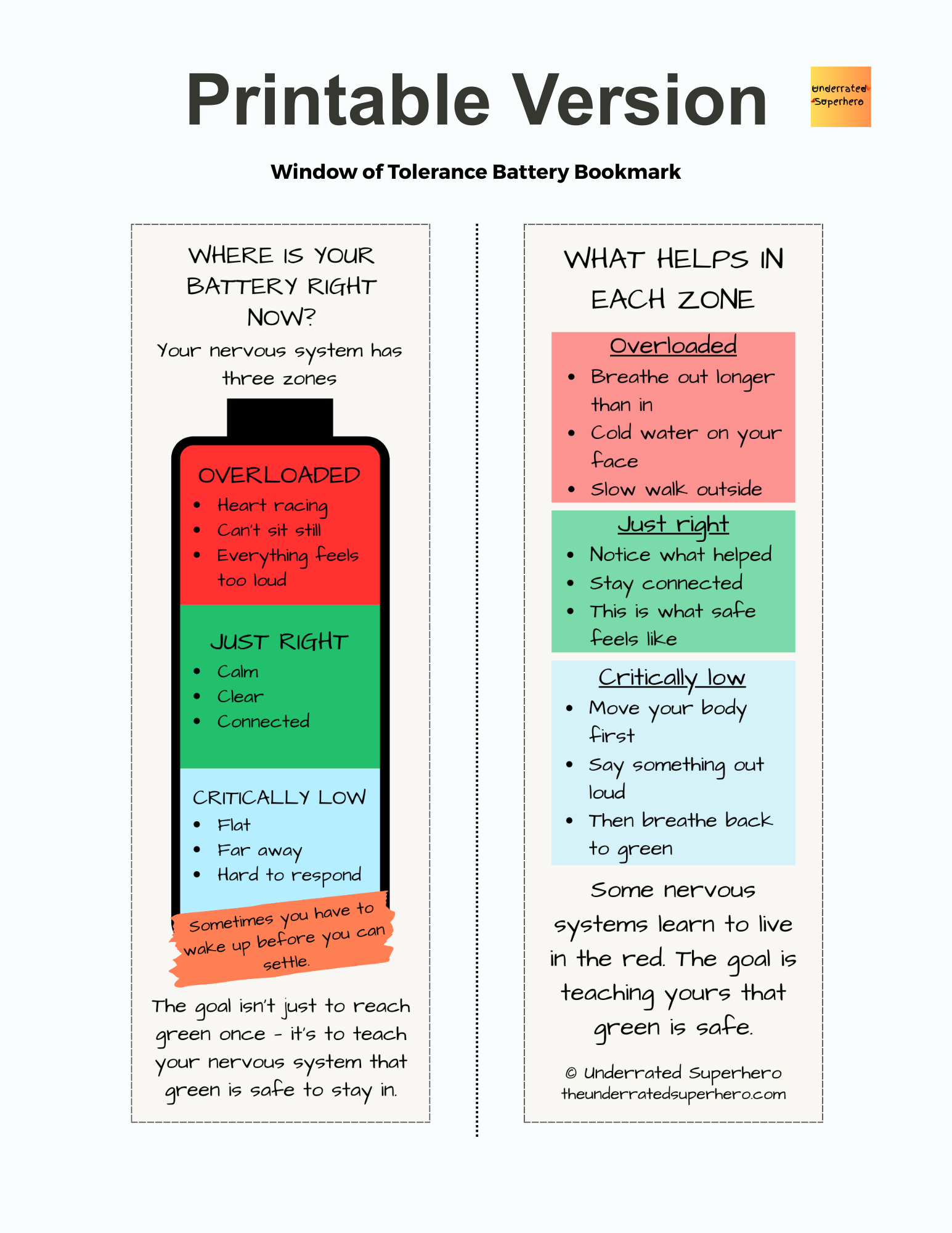
THE BATTERY BOOKMARK
FIND IT NOW IN YOUR PROFESSIONAL RESOURCES
Your clients already know what it means to be on empty.
Three zones. Simple language. No jargon. A tool that makes Window of Tolerance concepts accessible for kids, teens, and the families sitting in the room with them.
Use it in session. Send it home. Let the conversation keep going without you.
UNDERRATED TACTIC: THE BOOKMARK ONLY WORKS IF IT LEAVES THE OFFICE
Most clinicians introduce a tool in session and never see it again. Before it leaves the room, do three things.
Name the zones together. Ask the kid what red feels like in their body. What green feels like. The bookmark becomes theirs the moment their language is on it.
Give the parent one job. Not to fix the zone. Just to notice and name it. “Looks like you might be in the yellow zone right now.” Noticing without fixing is a skill most parents have never been asked to practice.
Tell them where it lives. Backpack. Bathroom mirror. Nightstand. Ask the kid. Let them decide. It needs a home or it disappears into a drawer.
The bookmark isn’t the intervention. The conversation you build around it is.
PAIRS PERFECTLY WITH THIS MONTH’S QUICK WIN: THE BATTERY BOOKMARK
Use the tool to send session language home — then notice what shifts in the family between appointments.
JUSTICE-INVOLVED TREATMENT MASTERY SERIES
Month 7: Article Releasing April 12th
The Justice-Involved Treatment Mastery Series continues this month with our 7th article.
If you’ve been following along, you know this series tackles the unique challenges of working with clients in the criminal justice system — the population everyone wants to help but few are trained to actually serve.
Previous Articles:
- Understanding the Justice-Involved Client
- Building Trust When the System Sent Them

- Navigating Mandated Treatment

- Documentation That Satisfies Courts AND Supports Recovery

- Motivational Interviewing for Mandated Clients

- Managing Relapse When the Court Is Watching
Coming April 12th:
Month 7’s article drops with subscriber-exclusive resources and practical tools you can use immediately.
Based on our comprehensive Justice-Involved Interactive Board
Ultimately, remember that you don’t have to reinvent the wheel. Explore The Underrated Superhero Resource Hub for ready-to-use tools, templates, and strategies that save you prep time and keep you focused on care.
– The Underrated Superhero
Prefer to download and read later?
