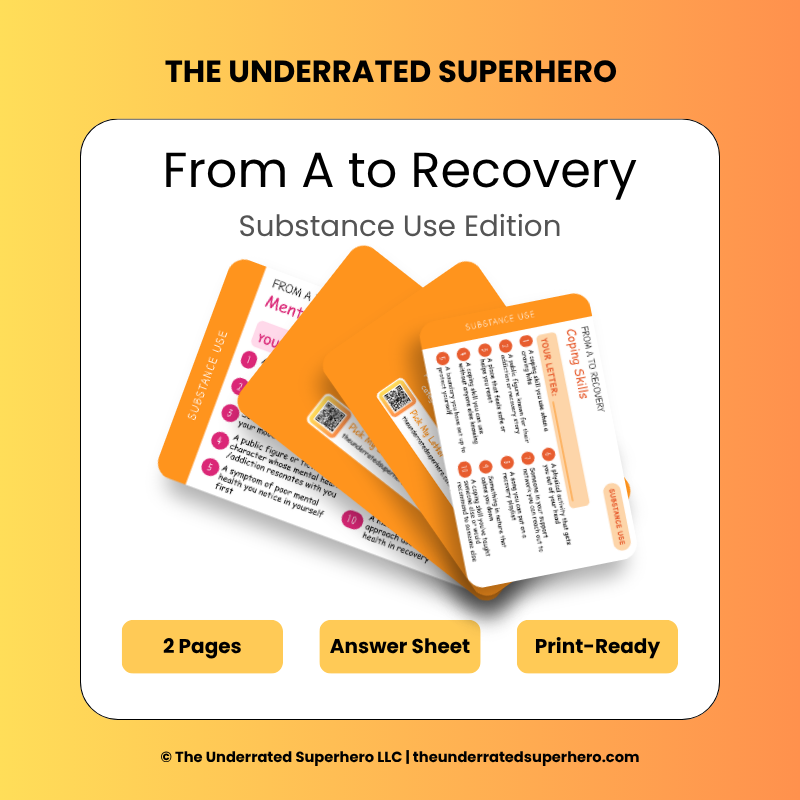
3 category cards (Coping Skills, Triggers, Support Systems) • Double-sided card backs • Session notepad • How-to-play with two game modes • Print at home, laminate for reuse
Games & Engagement Tools, Group Therapy & Psychoeducation
Best for
Individual sessions, early-stage groups, trauma-informed work, and any clinician looking for a low-prep, conversation-starting tool that gives clients a take-home reminder of their own coping skills, support network, and triggers.
This three-page self-assessment flips the script on Recovery Month — because clinicians need recovery too. It starts with a checklist of what you might be carrying (burnout, compassion fatigue, imposter syndrome, vicarious trauma, boundary erosion, substance use concerns), then asks how long it's been going on and what triggered it. The next section helps you identify what your recovery actually needs — whether that's time off, therapy, better supervision, a smaller caseload, or a career shift. It ends with a commitment to one step you're willing to take this month, including what might get in your way and who can hold you accountable.
This two-page guide equips addiction counselors with the tools to screen for suicide risk directly and confidently. It opens with why universal screening matters for clients with substance use disorders — who are 5-10x more likely to die by suicide than the general population — and addresses the common fear that asking about suicide increases risk (it doesn't). The guide provides exact language for opening the conversation, follow-up questions when a client says yes, and what to say when they say no to keep the door open. The middle section lists warning signs to watch for, from talking about being a burden to sudden calmness after depression. The final section walks through what to do if a client is at risk: staying calm, reducing access to means, creating a safety plan, involving supports, following agency protocol, and documenting everything. Crisis resources are included at the end (988, Crisis Text Line, Veterans Crisis Line, Trans Lifeline, SAMHSA).
Most clients carry both guilt and shame, and most can't tell you which one they're in. The difference matters clinically: guilt points at a behavior and can be turned into action, while shame collapses into identity and takes motivation with it. This worksheet gives clients a structured way to sort their own statements into one column or the other, then practice reframing the ones that have hardened into identity. It ships with a clinician instruction page you keep — purpose, when to use it, how to introduce it, what to watch for, and how to integrate it across sessions. The paired Guilt–Shame Cycle infographic shows how the pattern moves from shame to use and back again, and where it can be interrupted.