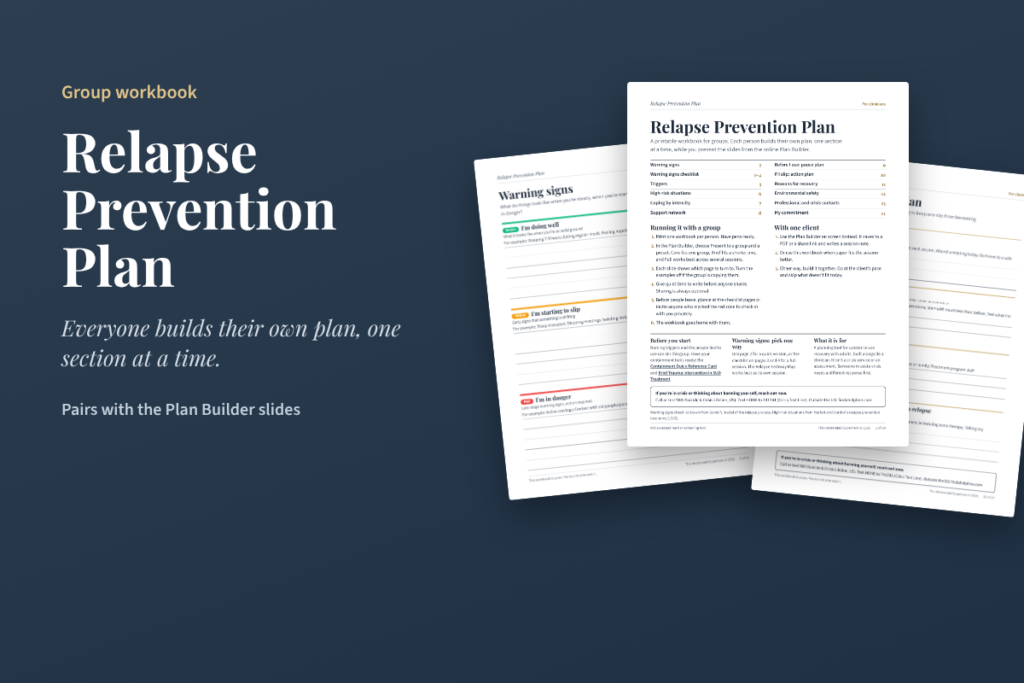
A 14-page printable workbook for building a relapse prevention plan in group. Each person fills in their own plan while you present the slides from the Plan Builder.
Relapse Prevention, Group Therapy, Discharge Planning
Best for
Relapse prevention groups in outpatient, intensive outpatient, and residential programs. It also works one-on-one when paper fits the session better than a screen, and for clients who want a plan they can hold onto.
This workbook gives each group member space to build their own relapse prevention plan, one section at a time. It covers warning signs, triggers, high-risk situations, coping, support, a pause plan, and a slip plan that includes staying safer if use happens. It also has reasons for recovery, environmental safety, contacts, and a closing commitment. A clinician guide on the first page covers running it in group, and each slide in the Plan Builder shows which page to turn to. The workbook goes home with the client. Not an assessment or screening tool.
Relapse rarely starts with use. It usually starts weeks earlier, with sleep, mood, or pulling away from people. This 6-page kit helps clients name their own warning signs, see what order they come in, and choose what they’ll do at each one. It includes a clinician guide, a pathway sheet the client keeps, warning signs and what helps checklists, and a reflective question for every item. There’s no score and no right order, and it photocopies cleanly. Adapted from Gorski and Miller (1986) and Marlatt and Gordon (1985). Not an assessment or screening tool.
This two-page guide helps addiction counselors prepare clients for Thanksgiving — one of the highest-risk holidays for people in recovery. It covers why the holiday is hard (family triggers, alcohol at the table, grief, financial stress, pressure to perform gratitude, early recovery vulnerability), then offers specific questions to ask before the day. The middle section provides scripts for saying no to drinks, guidance for clients spending Thanksgiving alone, and day-of reminders clients can hold onto (you can leave if you need to, you don't owe anyone an explanation, one hard day doesn't undo your recovery). The emphasis is on planning ahead — not waiting until the week of.