
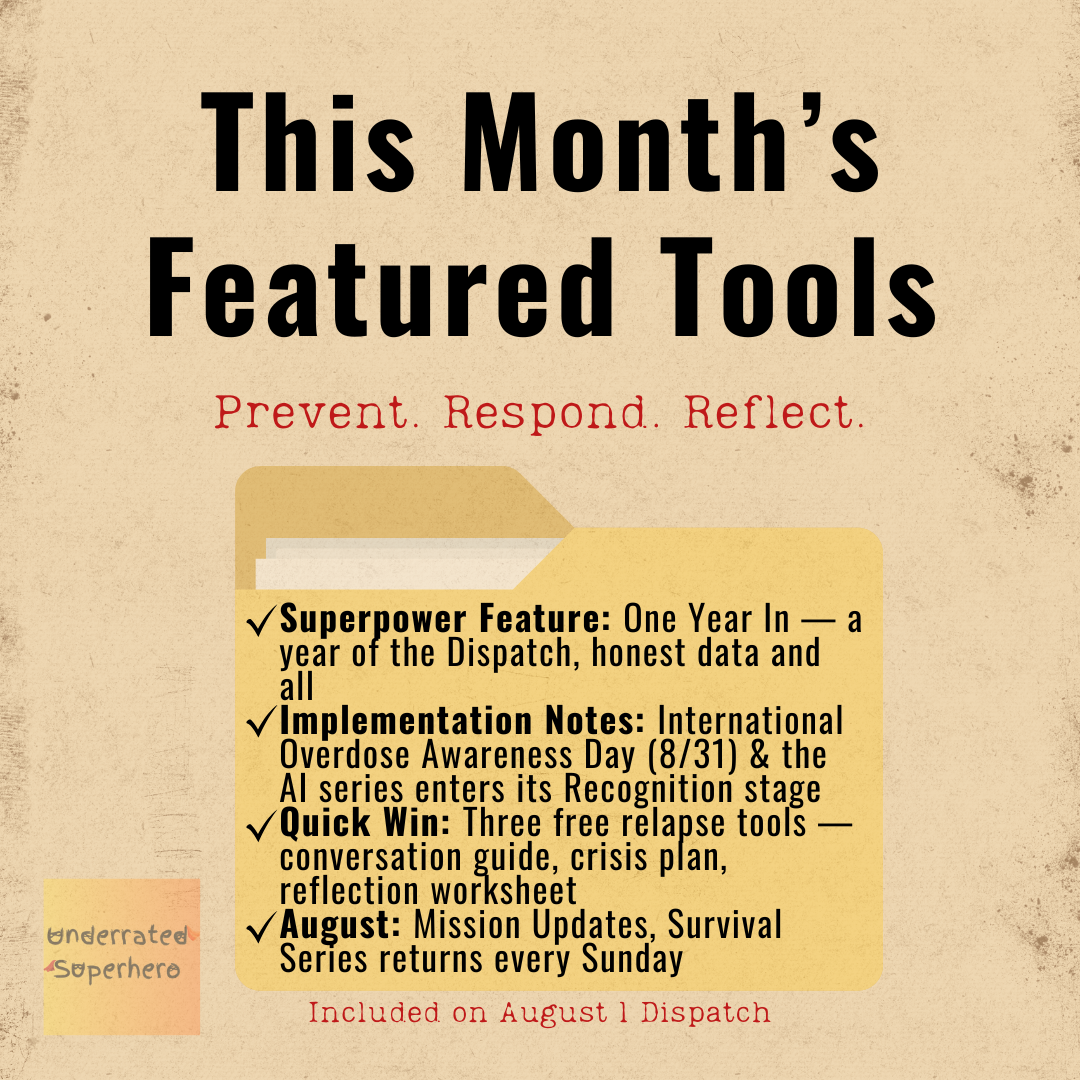
Monthly Strategies for the Underdog Clinician
This is Vol 13 of The Underrated Dispatch.
One year of this newsletter. And a month that ends on August 31 — International Overdose Awareness Day — which is where most of this issue is pointed.
FEATURED HIGHLIGHT: One Year In
This month marks one year of The Underrated Dispatch.
The numbers don’t reflect a year. I’m not going to dress that up, and I’m not asking for a pep talk about it. It’s just honest data — the same standard I applied when I restructured the platform in May, and the same one I’ll keep applying.
Here’s what a year built: twelve issues, shipped on the 1st, every month, in three formats. A platform restructure done in the open. Two flagship series — one completed, one relaunching this month. A resource library that keeps growing, free tools that clinicians actually use, and an audience that’s small but real.
Here’s what a year taught: build for the people who show up, not the number you imagined. That’s why nearly everything here is still free. That’s also why some things are resting — there’s no mastery series running right now, because I work full time as a clinician and I’d rather run fewer things well than more things badly. When the next series has room to be built right, it’ll be built.
Year two starts the same way year one did: on the 1st, with tools you can use.
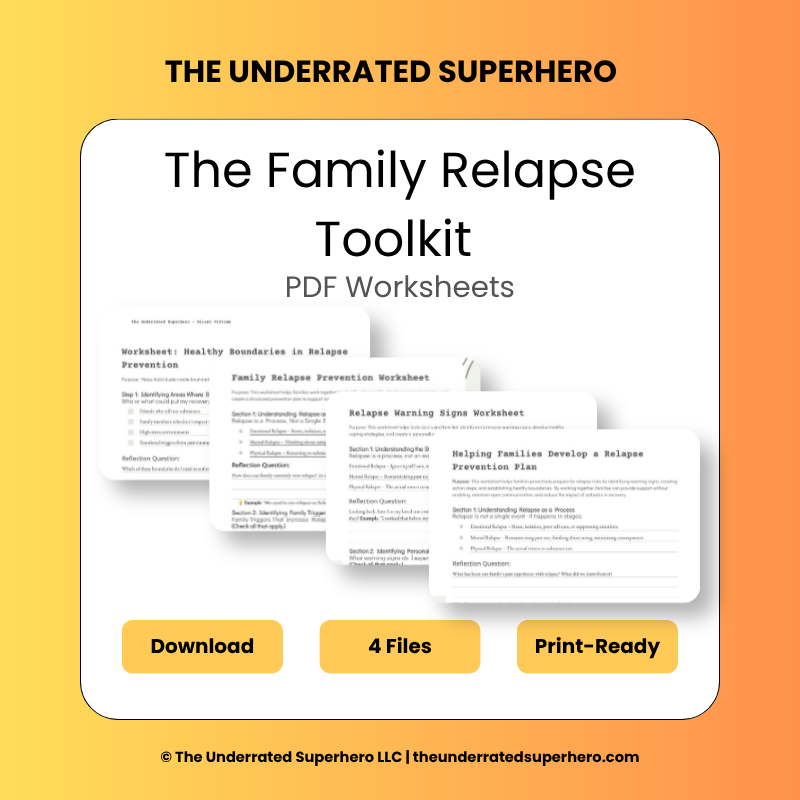
FEATURED RESOURCE — The Family Relapse Toolkit
Relapse doesn’t happen to one person. It happens to a household — the partner watching for signs they can’t name, the parent who doesn’t know the difference between supporting and enabling, the family that treats every setback as either catastrophe or nothing.
The Family Relapse Toolkit is four printable, clinician-ready worksheets built for exactly that system: relapse planning as a family, healthy boundaries in relapse prevention, developing a shared prevention plan, and recognizing early warning signs together. It’s designed for clinicians to use with families — in family sessions, psychoeducation workshops, or as part of aftercare planning.
This month’s Quick Win — below — works the individual. This works the system around them.
Available in the shop.
Important August Updates
🟣 INTERNATIONAL OVERDOSE AWARENESS DAY IS AUGUST 31
For most of the world, August 31 is a day of remembrance. For the clinicians reading this, it’s also a mirror held up to the daily work — the high-risk clients, the relapse conversations you’ve had and the ones you’ve been putting off, the crisis plans that exist on paper but nowhere else.
🛠️ THIS ISSUE IS BUILT AROUND THAT WORK
Recognizing escalation before it becomes crisis, planning before the plan is needed, and treating relapse as a process you can interrupt rather than an event you can only document. The Quick Win Toolkit, the featured board, and this month’s tactic all point at the same date.
AUGUST MISSION UPDATES
Here’s everything happening this month:
- One Year of the Dispatch (8/1) — Vol 13 marks year one
- Quick Win Tools (8/1) — Three free high-risk clinical tools
- Featured Board (8/1) — High-Risk Populations
- New Clinician Series returns (8/2; 8/9; 8/16; 8/23; 8/30) — Five new posts, every Sunday
- Monthly Content Drop (8/15)
- AI In Clinical Practice (8/1, 8/15) – Post 4 and Post 5
- International Overdose Awareness Day (8/31)
- Speaking: I’ll be presenting “The Judgment You Can’t Outsource: Staying Accountable When the Tools Get Confident” at the ICB Fall Conference, October 21 in Springfield. More next month.
THE SURVIVAL SERIES RETURNS: New Clinician Survival Series
Weekly strategies that bridge theory and reality.
I took July off. Not a soft launch of quitting — an actual pause, on purpose, which if you’ve read Blog #27 you know doesn’t come naturally to me. The series is back every Sunday in August, and this stretch goes somewhere specific: five blogs about authority — who has it, who questions it, and what happens when it gets handed to you whether you’re ready or not.
COMING IN AUGUST:
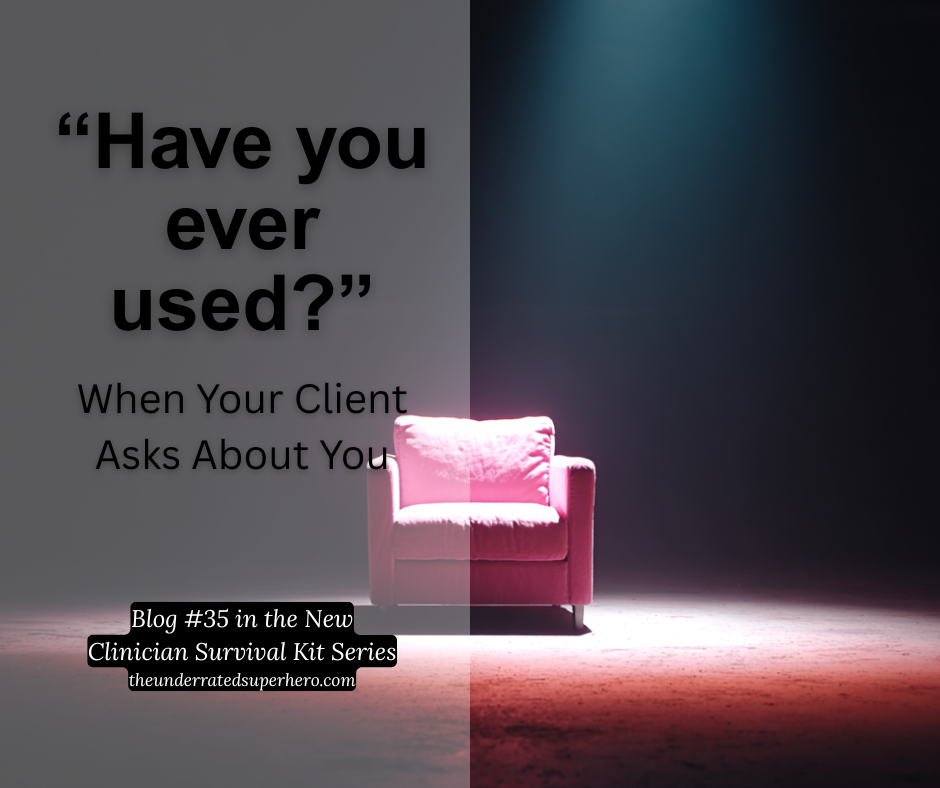
Blog #35 — “Have You Ever Used?” (8/2) The series returns with the authority arc — who has it, who questions it, and what happens when it gets handed to you. First up: the question every clinician gets eventually. A client asks you something direct about your own life — and every answer feels wrong. Deflect and you damage trust. Answer and you’re not sure whose session this is anymore. What self-disclosure actually costs, and who it’s supposed to serve.
- Blog #36 — “They Know More Than I Do” (8/9) — What you actually bring when knowledge isn’t it.
- Blog #37 — “It’s Not My Call” (8/16) — When discharge belongs to insurance, the court, or someone above you — and you’re the one in the room with what got decided.
- Blog #38 — “Now They Come to Me” (8/23) — The strange sequel to imposter syndrome nobody warns you about.
- Blog #39 — “I’ve Changed My Mind” (8/30) — When experience quietly overturns what you used to teach — and what you owe the clients who got the earlier version of you.
WHAT MAKES THIS SERIES DIFFERENT: Unlike generic “new professional” advice, this series specifically addresses the unique challenges of behavioral health work. Each post includes the uncomfortable thought, why it happens, what to do about it, and tools you can use immediately.
Last month I started writing about something I’d been doing quietly for two years — using AI in clinical work, carefully, and learning where it helps and where it quietly goes wrong. It’s not anti-AI and it’s not a sales pitch. It’s the middle position, from someone actually doing the work. This month, two posts that go to the heart of it:
Follow along: New posts drop every Sunday.
BONUS SPECIAL — AI In Clinical Practice: Recognition Stage Begins
The Foundation arc closed last month with the echo — the AI output that’s hardest to catch because it agrees with you. This month the series enters its second stage: Recognition. Seeing a frame is a skill, and August builds it across two posts — one on the frames in the room every time AI touches clinical work, and one on what happens when you push back.
Coming in August:
Post 4 “It Feels Like Being Right.” (8/1) The Recognition stage opens here. Three frames are in the room every time AI touches clinical work — the tool’s, your client’s, and yours. The third one hides best, because it never feels like a frame. It feels like being right. This post makes the case that the frame you can’t see is where this entire practice lives or dies.

Post 5 “It Folded. That Doesn’t Make You Right.
” (8/15) The inverse of the echo. You already know what agreement does — it switches your scrutiny off. This post covers what happens when you push back and the AI folds: why the fold feels like vindication, why it isn’t evidence you found an error, and what a fold should actually trigger in your review process.

FEATURED BOARD: High-Risk Populations
Some clients don’t give you the luxury of a slow build. The escalating use, the near-misses that get minimized in session, the pattern you can see forming before they can. The High-Risk Populations board is built for exactly that caseload — tools, frameworks, and resources for the clients who keep you up at night.
Perfect For:
- Clinicians working with clients in active escalation or recent overdose history
- Anyone doing relapse prevention work with clients who aren’t ready to stop
- Clinicians navigating harm reduction with high-acuity caseloads
- Anyone who has ever had to have the “I’m worried about you surviving this” conversation
Prevent. Respond. Reflect.
Three tools covering the full arc of relapse work
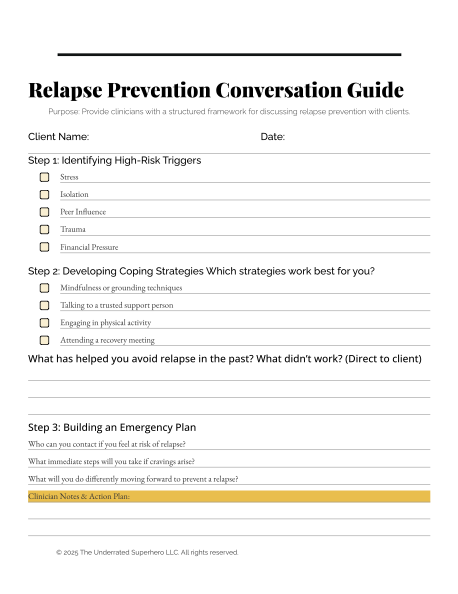
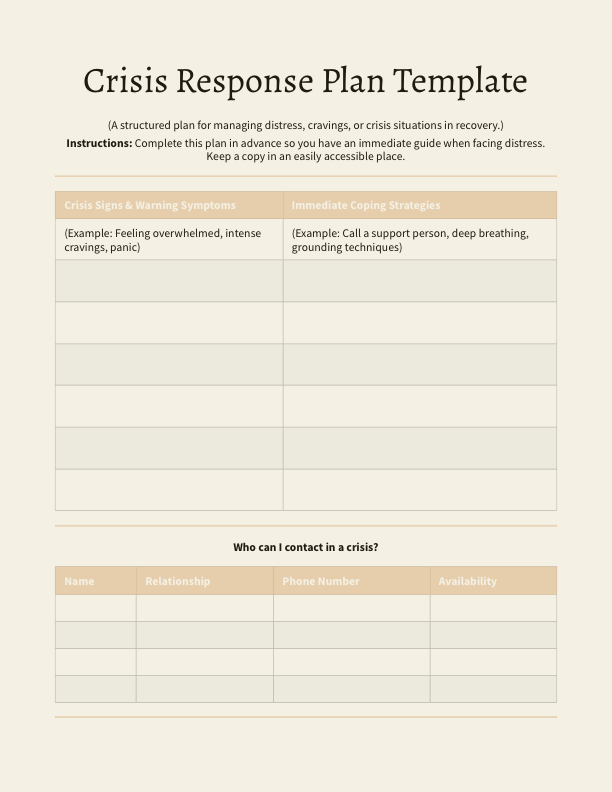
In honor of International Overdose Awareness Day, this month’s Quick Win isn’t one tool — it’s three. The Relapse Prevention Conversation Guide structures the conversation before crisis: triggers, coping strategies, what’s worked and what hasn’t. The Crisis Response Plan Template is a complete-in-advance plan — warning signs, immediate coping strategies, who to contact — on one page the client keeps. The Post-Relapse Reflection Worksheet treats relapse as data, not failure: what led up to it, which warning signs got missed, what changes now. Each is a standalone download. Free for all subscribers.
Conversation Guide → Crisis Response Plan → Reflection Worksheet →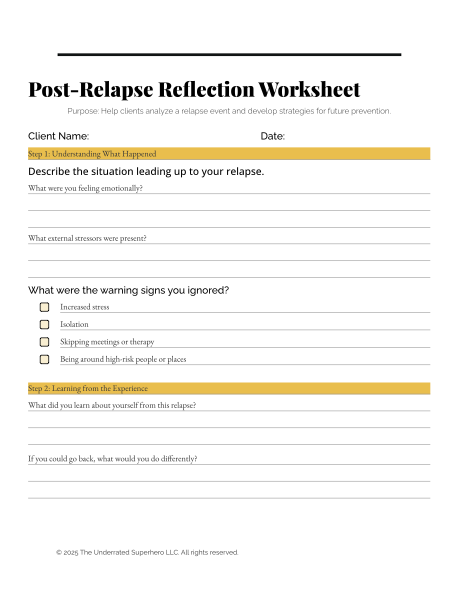
UNDERRATED TACTIC: Ask Who Else Reads the Plan
Here’s the quiet failure mode of crisis planning: the plan gets built in session, filed in the chart, folded into the client’s pocket — and nobody else on earth knows it exists. But the moments a crisis plan exists for are precisely the moments people struggle to help themselves.
So before you file this month’s Crisis Response Plan Template, ask one more question: “Who else should be able to read this?” Let the client name their person, and make sure that person actually sees it. One question turns a chart document into a safety net.
PAIRS PERFECTLY WITH THIS MONTH’S FEATURE AND QUICK WIN TOOL.
THIS MONTH’S RESOURCES – August Calendar Resources
Your home base for August — the month’s resources, awareness dates, and tools gathered in one place, all building toward International Overdose Awareness Day on the 31st. Bookmark it and check back as the month fills in.
The label is already in your charts. The question isn’t whether to use words for what you see — you have to. The question is whether you’re reaching for the read that’s accurate, or the one that’s fast.
The Underrated Superhero Resource Hub has ready-to-use tools, templates, and clinical resources built by someone who still sits across from clients every week. Use them.
— The Underrated Superhero
Prefer to download and read later?
