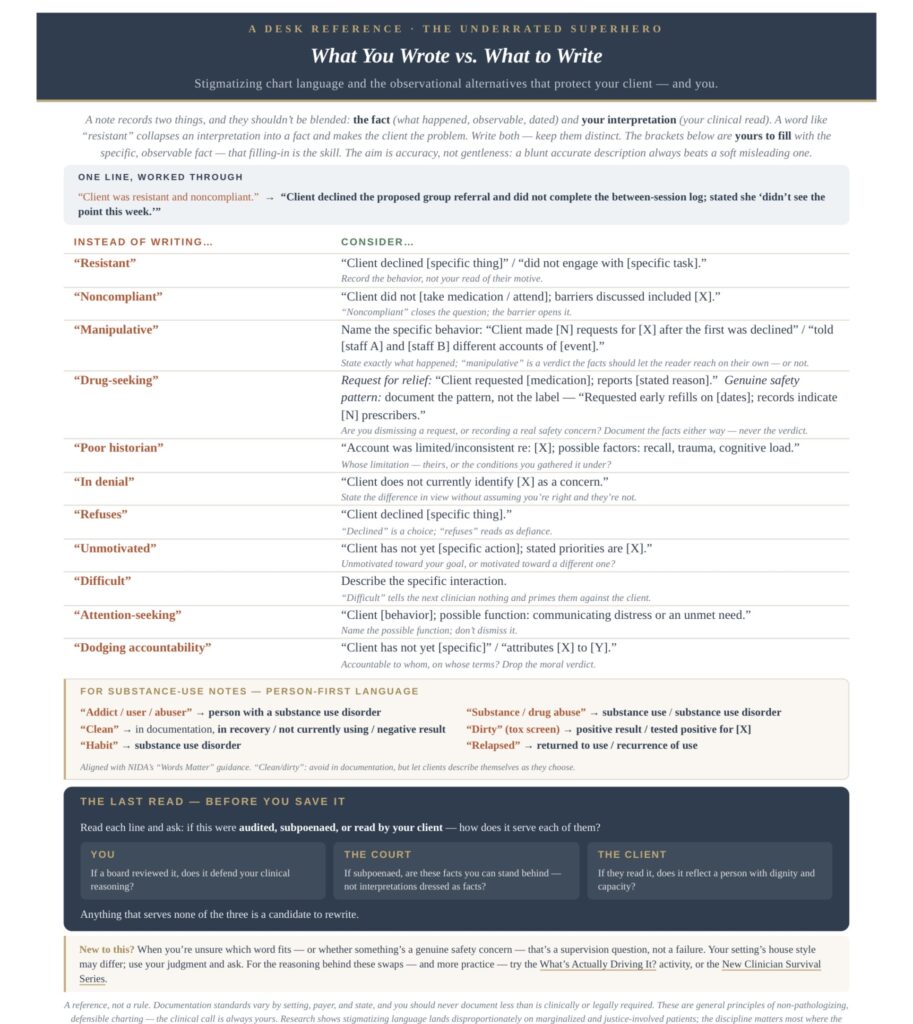
Stigmatizing language in clinical notes is common, persistent, and costly — research shows it lands disproportionately on marginalized and justice-involved clients, and once a word like “resistant” or “noncompliant” enters a chart, it tends to follow the person from clinician to clinician. This one-page desk reference pairs eleven of the most common stigmatizing phrases with observational alternatives that record what actually happened, alongside a substance-use section aligned with NIDA’s “Words Matter” guidance. Each entry separates the fact from the interpretation, so your notes stay accurate, defensible, and respectful of the person you’re writing about. Designed to sit at your desk and be glanced at in the moment you’re charting — not studied, just used. It closes with a simple test for any line you’re unsure about: if this were audited, subpoenaed, or read by your client, how does it serve each of them?