March
"when clients push back"
Resistance can feel personal—especially when you're new. But pushback is rarely about you. This month is about learning to stay steady when clients test the waters, and recognizing what their resistance is really telling you.
📌 Note: All downloadable resources from The Underrated Superhero require at least a free account to access. Create your free account →
💡 March Tip
📋 Q1 Goal Check-In
You're three months in. This is a good time to zoom out and look at the goals you set in January. Are they still serving you?
- What progress have you made on your clinical skills goal?
- Have you connected with a mentor or taken a step toward professional development?
- How is your sustainability goal holding up? Be honest.
- What needs to shift for Q2? Sometimes the goal was right but the approach wasn't.
✅ March Checklist
Spring is coming. Shake off winter and reset. Check off what you've done (or what you'll do this week).
💡 Tip: Screenshot this list or bookmark this page. Come back at the end of the month to see your progress.
📅 March Awareness Dates
Click any card to see related resources.
💚 Feeling overwhelmed? You don't need to engage with all of these. Pick one or two that connect with your caseload or your curiosity right now — and come back for the rest later.
Self-Injury Awareness Day
Non-suicidal self-injury is a coping mechanism that often co-occurs with substance use — and it's easy to miss if you're only screening for suicidality.
📊 NSSI + SUD: The Co-Occurring Reality
Self-injury and substance use share overlapping functions — both serve as attempts to regulate overwhelming emotions:
- Up to 60% of individuals who engage in NSSI also have a substance use disorder
- Both serve regulatory functions: numbing, distraction, self-punishment, control — the mechanism differs but the purpose is the same
- Clients may substitute: When substance use decreases, self-injury can increase as a replacement coping strategy
- Shame cycle: Self-injury → shame → substance use to cope with shame → more self-injury
- Screening gap: Many SUD assessments don't ask about NSSI specifically
⚠️ Signs That May Indicate Self-Injury
- Unexplained marks — cuts, burns, bruises in patterns
- Wearing concealing clothing in warm weather
- Frequent "accidents" — explanations that don't quite add up
- Emotional escalation-crash patterns — intense distress followed by sudden calm
Important: NSSI and suicidality are different but related. Someone who self-injures is not necessarily suicidal — but NSSI does increase suicide risk over time. Always assess both.
💡 How to Ask
- Direct is better than vague. "Sometimes when people feel overwhelmed, they find ways to hurt themselves physically to cope. Has that ever been true for you?"
- Don't just ask about cutting. NSSI includes burning, hitting, scratching, hair pulling, interfering with wound healing
📥 Member Resources
📄 Self-Injury Screening Quick Reference Member🔗 External Resources
📖 S.A.F.E. Alternatives — Self-Abuse Finally Ends ↗ 📱 Crisis Text Line — Text HOME to 741741 ↗ 🧠 NIMH: Self-Harm Overview ↗📚 Related Resources in the Library
National Social Work Month
You chose a hard job. That matters. This month, recognize the work — yours and your colleagues'.
🤝 The Workforce Reality
- Annual turnover: ~25% of substance abuse clinicians leave the field each year
- Median salary: $49,710/year (BLS, 2023) — significantly less than other clinical roles
- Burnout rates: 67% report emotional exhaustion; 50% report disengagement
- Projected shortage: SAMHSA projects the U.S. will need 7,000+ additional addiction counselors by 2027
💡 5 Ways to Honor the Month
- Thank a colleague who helped shape your career
- Write down one thing you're proud of from Q1. Your wins matter.
- Let yourself be thanked. Practice saying "thank you."
- Mentor someone. Even 15 minutes can change their trajectory
- Advocate for yourself. Is it time to ask for a raise or negotiate your caseload?
🔗 External Resources
🏛️ NASW — Social Work Month Resources & Theme ↗ 📚 NAADAC — Association for Addiction Professionals ↗📚 Related Resources in the Library
Women's History Month
Women in addiction treatment face unique barriers — stigma, childcare, trauma, and a treatment system that wasn't designed for them.
📊 The Gender Gap in SUD Treatment
- Telescoping effect: Women progress from first use to dependence faster than men
- Treatment barriers: Childcare, partner opposition, financial dependence, and stigma keep women from seeking help
- Trauma prevalence: 55-99% of women in SUD treatment report histories of physical or sexual abuse
- Pregnancy stigma: Fear of losing custody is the #1 reason pregnant women avoid treatment
- Relationship influence: Women are more likely to be introduced to substances by a partner
💡 Clinical Application
- Screen for IPV routinely. Relationship safety should be assessed at every stage.
- Ask about childcare. "What would make it easier for you to attend treatment?"
- Use gender-responsive approaches. Relational-cultural theory, trauma-informed care, and strengths-based models are evidence-based for women
🔗 External Resources
📋 SAMHSA: Women, Children, and Families ↗ 🔬 NIDA: Substance Use in Women Research Report ↗🗺️ Explore the Interactive Board
🗂️ Women-Focused Interactive Board Free📚 Related Resources in the Library
International Women's Day
Celebrate the women clinicians, researchers, and advocates who built the addiction treatment field — and the women clients who show up every day despite the odds.
💜 Women Who Shaped Addiction Treatment
- Marty Mann (1904-1980) — First woman to achieve long-term sobriety in AA; founded the National Council on Alcoholism
- Dr. Nora Volkow — Director of NIDA since 2003; transformed understanding of addiction as a brain disorder
- Claudia Black, PhD — Pioneered understanding of how addiction affects the whole family
- Dr. Judith Herman — Her book "Trauma and Recovery" created the framework for trauma-informed treatment
💡 Use This Day In Session
- Ask female clients: "Who's a woman who inspires your recovery?"
- In group: Facilitate a discussion on what it means to be a woman in recovery
Brain Awareness Week
Understanding the neuroscience of addiction changes how you explain it to clients — and how they understand their own recovery.
🧠 The Addicted Brain: What Your Clients Need to Know
- Dopamine hijacking: Substances flood the brain with 2-10x more dopamine than natural rewards
- Prefrontal cortex impairment: Decision-making and impulse control are weakened by chronic use. This isn't willpower failure; it's neurological compromise
- Habit formation: Repeated use shifts behavior from goal-directed to automatic. Cues trigger use before conscious choice kicks in
- Neuroplasticity = hope: The brain heals. PAWS is temporary. It gets better — and the science proves it
💡 How to Use This in Session
- "Your brain is lying to you" — Cravings are the brain demanding what it's adapted to, not a reflection of weakness
- "Recovery is brain repair" — Every day sober is a day their brain is healing
- Explain PAWS. "Months 2-6 can feel worse than detox because your brain is recalibrating. This is temporary."
Daylight Saving Time & World Sleep Day
Losing an hour disrupts sleep, mood, and routines. For clients in early recovery, that disruption can be the difference between a good week and a relapse.
📊 Sleep + SUD: The Vicious Cycle
- Up to 72% of people in early recovery report significant sleep problems
- Sleep disturbance predicts relapse — poor sleep quality in the first months of recovery is one of the strongest predictors of return to use
- Alcohol suppresses REM sleep — REM rebound causes intense, vivid, often disturbing dreams. Normalize this with clients
- Self-medication cycle: Can't sleep → use substances to sleep → substances worsen sleep → worse sleep without substances → relapse
⚠️ Daylight Saving Time: A Clinical Heads-Up
- Mention it in session the week before. "Heads up — we lose an hour this weekend. How's your sleep been? Do you have a plan?"
- Prep strategies: Shift bedtime 15 minutes earlier starting Wednesday. Avoid caffeine after noon. Get morning sunlight.
🔗 External Resources
🛏️ Sleep Foundation: Substance Abuse and Sleep ↗ 🌙 World Sleep Day — Resources & Toolkits ↗📚 Related Resources in the Library
National LGBTQ Health Awareness Week
LGBTQ+ individuals face disproportionate rates of substance use — driven by minority stress, discrimination, and a treatment system that often isn't affirming.
📊 The Disparities Are Real
- 2-3x higher rates of substance use among LGBTQ+ adults compared to heterosexual/cisgender peers
- Minority stress model: Discrimination, stigma, internalized homophobia/transphobia, rejection, and concealment all drive substance use
- Transgender individuals: Report SUD rates up to 4x higher than the general population
- Treatment avoidance: Fear of discrimination keeps LGBTQ+ individuals from seeking help
💡 Creating an Affirming Practice
- Use the name and pronouns your client gives you. Every time. Non-negotiable baseline respect.
- Don't assume sexuality or gender identity. Use inclusive intake forms.
- Examine your space. Are there visible signs of inclusion? Clients read the room before they read you.
- Get trained. Your good intentions aren't a substitute for competency.
🗺️ Explore the Interactive Board
🗂️ LGBTQIA+ Interactive Board — Affirming resources and clinical guides Free🔗 External Resources
📚 National LGBTQIA+ Health Education Center — Free Clinical Training ↗ 📋 SAMHSA: LGBTQI+ Behavioral Health Equity ↗ 💜 The Trevor Project — Crisis Support for LGBTQ+ Youth ↗📚 Related Resources in the Library
Problem Gambling Awareness Month
Gambling disorder is the most overlooked process addiction in SUD treatment. If you're not screening for it, you're missing it.
📊 The SUD + Gambling Connection
- Co-occurrence: People with gambling disorder are 3-6x more likely to also have a substance use disorder
- Shared neuroscience: Gambling activates the same dopamine reward pathways as drugs and alcohol
- Transfer of addiction: Clients may shift from substances to gambling in recovery, especially sports betting
- Financial devastation: Average gambling-related debt is $55,000 — a major relapse trigger
💡 Quick Screen: Two Questions
- 1. "Have you ever felt the need to bet more and more money?"
- 2. "Have you ever lied to people important to you about how much you gamble?"
One "yes" = follow up.
National Drug & Alcohol Facts Week
NIDA's annual event focused on the science of drug use and addiction — designed to educate youth but packed with resources clinicians can use too.
💡 How to Use This Week
- Share facts in group. Use NIDA's fact sheets as discussion starters
- Bust myths. "Marijuana isn't addictive," "You can't overdose on pills if they're prescribed"
- Educate families. Share NIDA resources with parents and loved ones
- Update your own knowledge. Fentanyl analogs, xylazine, emerging drug trends
🔗 External Resources
🔬 NIDA: National Drug & Alcohol Facts Week — Official Toolkit ↗🗺️ Explore the Interactive Board
🗂️ Youth & Adolescents Interactive Board Free🛒 Make It Fun: Games for Psychoeducation
Turn Drug & Alcohol Facts Week into an interactive experience:
National Recovery Day
Recovery is worth recognizing — however it looks. A week without use counts. Showing up to session counts. Trying again after a setback counts.
🎉 Use This Day Intentionally
- Acknowledge milestones in session. Big and small.
- Write a brief note of encouragement. A handwritten card can carry someone through a hard week
- Ask clients: "What are you proud of?" — and actually listen to the answer
🛒 Related Items in the Shop
Recovery-affirming tools for your clients:
📚 Related Resources in the Library
World Bipolar Day
Bipolar disorder and SUD co-occur at alarming rates. If you're treating one without screening for the other, you're working with half the picture.
📊 Bipolar + SUD: The Numbers
- 40-60% of people with bipolar disorder will develop a co-occurring SUD in their lifetime
- Alcohol is the most common substance of misuse among bipolar individuals
- Diagnostic confusion: Substance-induced mood symptoms can mimic bipolar disorder
⚠️ Red Flags to Watch For
- Mood cycling that doesn't match substance use patterns
- Grandiosity, decreased need for sleep, racing thoughts during periods of abstinence
- Family history of bipolar disorder — always ask
Clinical tip: Use the Mood Disorder Questionnaire (MDQ) as a quick screen. It takes 5 minutes and can change a treatment plan.
⚠️ Important: The MDQ is a screening tool, not a diagnostic instrument. A positive screen flags the need for further evaluation — refer to a psychiatrist or psychologist for comprehensive assessment when in doubt.
🔗 External Resources
💜 Depression & Bipolar Support Alliance (DBSA) ↗ 🧠 NIMH: Bipolar Disorder Overview ↗International Transgender Day of Visibility
Visibility saves lives. Transgender clients face enormous barriers to treatment — and affirming care starts with you seeing them.
📊 Transgender Clients in SUD Treatment
- SUD rates up to 4x higher among transgender individuals
- Substance use as survival: Many use substances to cope with gender dysphoria, discrimination, family rejection, and violence
- Treatment avoidance: Fear of being misgendered or forced into gender-segregated housing keeps transgender clients from seeking help
💡 What Affirming Care Looks Like
- Use their name and pronouns. Every single time.
- Update your intake forms. Include fields for chosen name, pronouns, and gender identity
- Don't make their gender the focus unless they bring it up. They came in for SUD treatment.
- Advocate at your agency. Gender-neutral restrooms, inclusive policies, staff training
🗺️ Explore the Interactive Board
🗂️ LGBTQIA+ Interactive Board — Affirming resources and clinical guides Free🔗 External Resources
🏳️ National Center for Transgender Equality ↗ 💜 The Trevor Project — Crisis Support for LGBTQ+ Youth ↗📚 Related Resources in the Library
When Clients Push Back
This three-page worksheet helps new clinicians reframe client resistance as information rather than rejection. It walks through four areas: understanding what pushback might really mean, identifying your personal triggers when clients resist, grounding strategies to stay steady in the moment and after session, and a reflection exercise to process a recent difficult interaction.
Best for: New clinicians who take client resistance personally or feel their confidence shake when a session doesn't go smoothly.
Access ResourceSelf-Injury Screening Quick Reference
This two-page reference guide helps addiction counselors screen for non-suicidal self-injury (NSSI) — a coping mechanism that often co-occurs with substance use but gets overlooked when clinicians focus only on suicidality and drug use. It covers what NSSI is and how it functions, signs that may indicate self-injury, how to ask directly without increasing risk, and next steps for documentation, safety planning, and referral.
Best for: Addiction counselors who want practical guidance on screening for self-injury alongside substance use.
Access ResourceSpring Restlessness: "I'm Good Now" Syndrome
As the weather warms up, watch for clients who suddenly want to "take a break" from treatment. A few good weeks can lead to overconfidence. Warmer weather also brings new triggers — outdoor gatherings, old routines resurfacing, social events increasing.
Try this: When a client says "I think I'm good now," get curious instead of defensive. Ask what's changed, what their plan is for maintaining progress, and what warning signs they'll watch for. Collaborate on an exit plan rather than just letting them drift away.
💬 Bring to Supervision This Month
Not sure what to talk about in your next supervision or team meeting? Try one of these:
- → "I had a client push back hard on me this week. Can we talk through what happened and what I could try differently?"
- → "How do you handle it when a client wants to leave treatment early? Do you fight it or collaborate on an exit plan?"
- → "Are we screening for self-injury in our assessments? I think we might be missing something."
- → "I want to explain the neuroscience of addiction better to clients. Can you help me simplify my language?"
💡 Tip: Screenshot one of these and bring it to your next 1:1.
📝 Related Reading
"I Got a Complaint" — When a Client or Family Pushes Back Formally
The panic, the shame, the spiral. Here's what to actually do when a complaint lands on your desk.
"I Want to Quit" — When Burnout Becomes a Career Question
The difference between needing a break and needing out. Permission to stay AND permission to leave.
"My Client Hates Me" — When You Feel the Resistance
They're cold, they're hostile, they answer in one word. Here's what to do when a client makes it personal.
"They Keep Relapsing" — When Progress Feels Impossible
When the same client comes back again and again — what to do with your frustration and your treatment plan.
Coming in April
"When It Hits Close to Home" — Alcohol Awareness Month, Counseling Awareness Month, Child Abuse Prevention Month, and National Alcohol Screening Day. Plus: 4/20 conversations and navigating personal triggers.
📰 October 2026 Newsletter – The Underrated Dispatch
Monthly Strategies for the Underdog Clinician This is Vol 15 of The Underrated Dispatch. FEATURED HIGHLIGHT: Reading AI: Clinical Judgment in AI-Assisted Practice When I
It Recommended the Safe Thing.
AI Training Data Bias I was drafting a note for a client with high acuity. Everything I put in front of the tool was cleansed
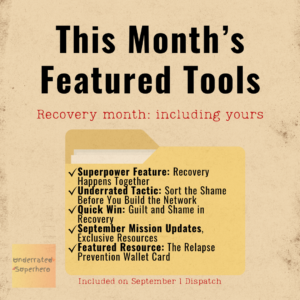
📰 September 2026 Newsletter – The Underrated Dispatch
Monthly Strategies for the Underdog Clinician This is Vol 14 of The Underrated Dispatch. FEATURED HIGHLIGHT: Recovery Happens Together September is National Recovery Month. This

It Folded. That Doesn’t Make You Right.
AI Changes Its Answer Before I go further: nothing about this involves a tool with access to our records. It’s drafting work, done inside whatever
Have You Ever Used? — Self-Disclosure and the Rule I Never Questioned
Therapist Self-Disclosure “I sit here and tell you all this stuff about me and you can’t even tell me that.” I’ve heard some version of
It Feels Like Being Right.
AI Confirmation Bias Here’s something that happens in my own workflow — and it happens with a tool I’ve spent two years instructing to argue