
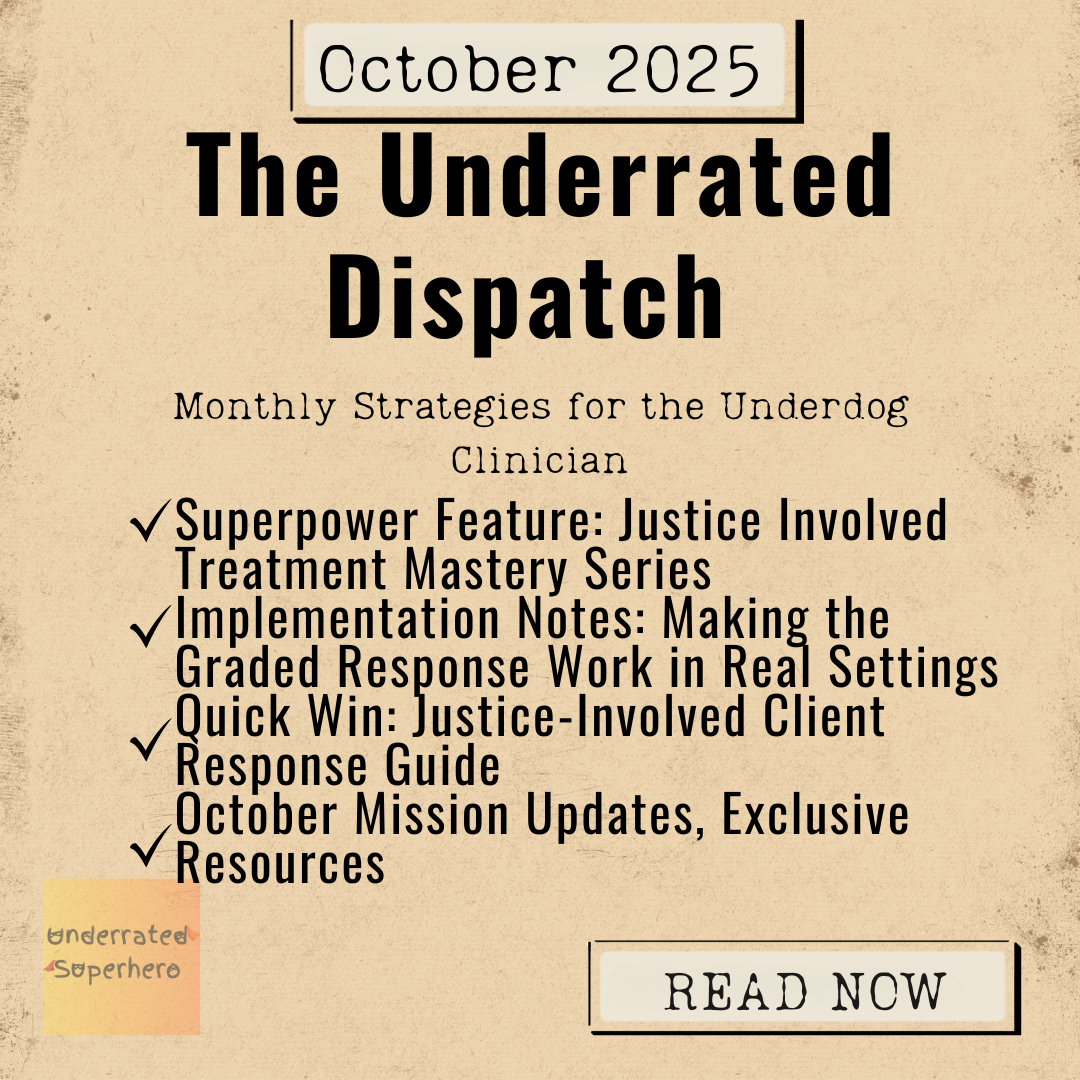
Monthly Strategies for the Underdog Clinician
Featured Highlight: Launch Day – Your Survival System for the Hardest Parts of the Job
When overwhelm meets intentional support
You’re between sessions. Client just disclosed relapse. Or trauma. Or suicidal ideation. You need to document it—but your next client is already in the waiting room.
“I’ll write this note right after,” you tell yourself.
Except the next session is also intense. Then there’s a crisis call. And suddenly it’s 4pm with six undocumented sessions floating in your brain, details bleeding together, and you can’t remember which client said what.
Meanwhile, if you’re a new clinician, you’re also wondering: Am I even doing this right? What do I say when I run out of things to talk about at minute 15? How do I know if my documentation is good enough?
Fortunately, the solution isn’t working harder—it’s having better systems.
That’s exactly why we created our quarterly kits for clinicians. The Survival Kit gives new clinicians the confidence-building structure they desperately need in their first two years. The Sidekick Kit gives every clinician—regardless of experience—the documentation systems that actually work when you’re drowning in back-to-back sessions.
These aren’t generic self-care platitudes. They’re planners, journals, reflection tools, practical templates, and physical reminders designed specifically for the chaos of behavioral health work-because research shows that documentation burden and early-career overwhelm are primary drivers of clinician burnout. Because sustainable practice doesn’t come from working harder—it comes from having systems that support you when things get overwhelming.
THE SURVIVAL KIT: First 90 Days Confidence
For early career clinicians navigating:
- Agency politics and “where do I even fit in this hierarchy?”
- The terror of 45-minute sessions when conversation runs dry
- “Am I documenting this correctly?” anxiety
- Imposter syndrome that questions every intervention
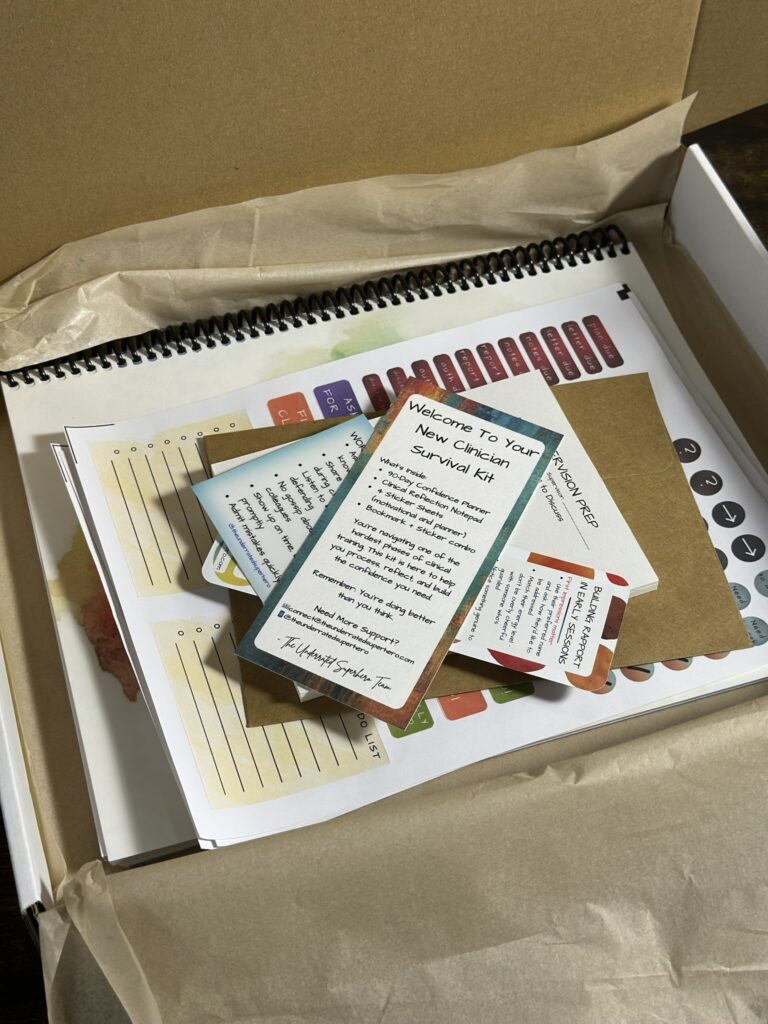
What’s inside:
- 90-Day Confidence Planner (Printed + Digital)
- Confidence-building stickers, reflection tools, workplace reminders
- 11 digital resources: templates, guides, crisis protocols
- Professional edition or Specialty edition
THE SIDEKICK KIT: Documentation Mastery
On the other hand, if you’re past the survival phase but drowning in paperwork, this kit is designed specifically for you. For any experience level struggling with:
- Note pile-up and compliance anxiety
- The 60-second memory gap between session end and note completion
- Documentation stealing evenings and weekends
- Paperwork overwhelming actual clinical work
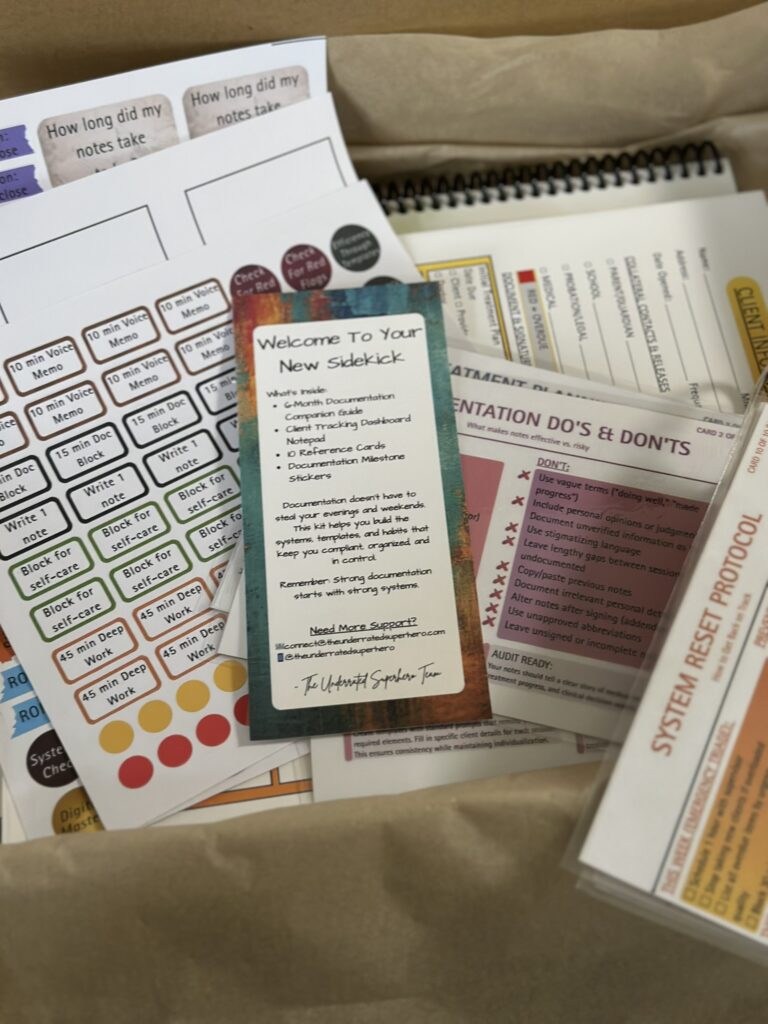
What’s inside:
- 90-Day Documentation Mastery Journal (Printed + Digital)
- Time management reflection cards, client tracker notepad, journal
- 11 digital resources: systems, templates, efficiency strategies
- Professional edition or Specialty edition
Quarterly refresh. New themes each season. Available while supplies last.
Both quarterly kits for clinicians are designed with the reality of behavioral health work in mind—not the idealized version where you have unlimited time and energy. These are tools built for the chaos, the overwhelm, and the back-to-back days that define our field.
November Mission Updates
In addition to our kit launch, here’s everything else happening this month:
- Quarterly Kits (11/1) – Kits Are Live! Shop now
- Featured Board (11/1) Adolescents & Children
- New Clinician Survival Kit Series – Weekly releases (11/2, 11/9, 11/16, 11/23, 11/29)
- Justice-Involved Mastery Series (11/9) – 2nd Article Release with Materials
- Monthly Content Drop (11/15)
Our quarterly kits for clinicians launch today. These are limited-run, seasonal releases designed for the specific struggles behavioral health professionals face each season.
Bonus Special: New Clinician Survival Series – Ongoing
Weekly strategies that bridge theory and reality
Beyond the quarterly kits for clinicians, we’re committed to providing ongoing weekly support through our blog series. Week by week, we’re addressing real struggles counselors in their first two years face—with practical strategies, not platitudes.
Recent Posts:
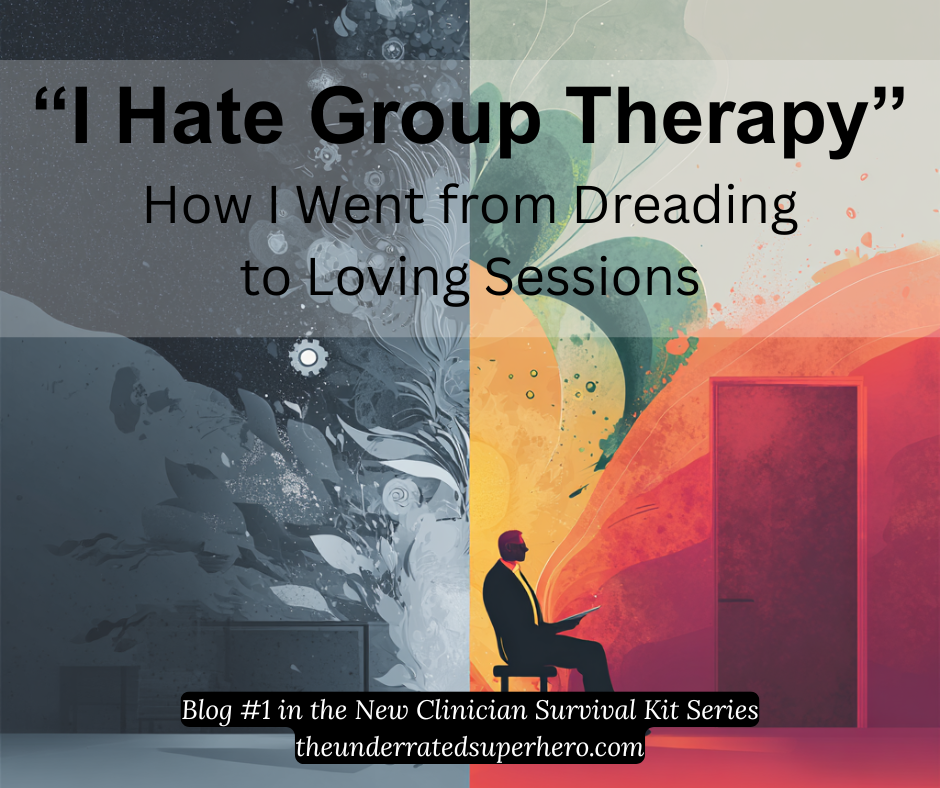
- “I Hate Group” – When facilitation feels impossible
- “I Can’t Do This” – Imposter syndrome survival guide
- “My Client Hates Me” – Reading therapeutic relationships accurately
What Makes This Series Different
Unlike generic “new professional” advice, this series specifically addresses the unique challenges of early-career behavioral health work. Each post includes the uncomfortable thought, why it happens, what to do about it, and tools you can use immediately—decision trees, scripts, and reflection prompts.
These posts are designed to challenge your assumptions and address common struggles like imposter syndrome, which research indicates affects up to 82% of healthcare professionals at some point in their careers. Consequently, don’t just skim—actually pause and think about how the content applies to your specific situation.
Coming in November:
- “I’m Making It Worse” (11/2) – Fear of harming clients
- “I Can’t Say No” (11/9) – Setting boundaries with clients
- “They’re Going to Report Me” (11/16) – Professional fear and compliance anxiety
- “I’m Too Tired to Care” (11/23) – Burnout and compassion fatigue
Follow along: New posts drop every Sunday.
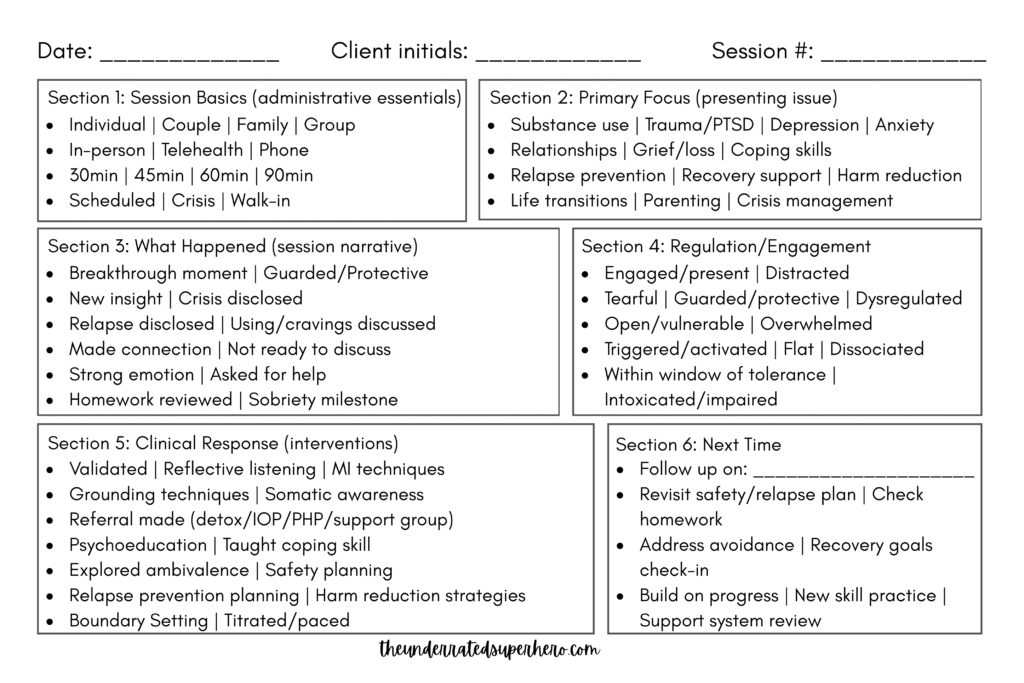
Quick Win Tool of the Month: Justice-Involved Client Treatment Response Guide
To complement the Sidekick Kit’s documentation focus, this month’s free tool addresses the memory gap problem every clinician faces. Stop losing session details between back-to-back clients Stop losing session details between back-to-back clients. Studies show that clinicians spend up to 50% of their work time on documentation, often writing notes long after sessions end when memory has faded. This simple circle-and-capture method takes one minute after each session but saves 30 minutes when you finally sit down to write notes.
When documentation piles up and memory fades, this system bridges the gap between “session just ended” and “sitting down to write the note three days later.” Circle keywords, jot key phrases, complete full note later with confidence.
Want pre-printed convenience? Shop cardstock packs and tear-off notepads—no printer needed.
Underrated Tactic: The Two-Minute Debrief
Turn overwhelm into momentum
Building on the capture system, this tactic creates a complete end-of-session routine.
- After each session: Take 60 seconds to capture what happened (Quick Capture Cards)
- End of day: Take 60 seconds to name one thing you did well
- Before leaving: Set one intention for tomorrow
Pairs perfectly with our new quarterly kits for clinicians – both the Survival Kit and Sidekick Kit include reflection tools that make this two-minute practice sustainable, not another burden on your plate.
Ultimately, remember that you don’t have to reinvent the wheel. Explore The Underrated Superhero Resource Hub for ready-to-use tools, templates, and strategies that save you prep time and keep you focused on care.
– The Underrated Superhero
Prefer to download and read later?
