What's one thing that went right this week? Noticing it isn't toxic positivity—it's survival. This month is about finding gratitude without ignoring the hard stuff.
💡 November Tip
🙏
What's one thing that went right this week? Noticing it isn't toxic positivity—it's survival. Gratitude for the ones who made it—grace for the ones who didn't.
Want the full 2026 calendar? It's included in the Winter 2026 Quarterly Kit.
Get it →
🎯
Personalize Your Calendar
The Winter 2026 Kit includes stickers to personalize your calendar with dates that matter to you—client milestones, personal reminders, or trigger dates.
💔 Survivors of Suicide Loss Day
November 21, 2026
Check in on clients who've lost someone to suicide. Check in on colleagues. Check in on yourself.
🚭 Great American Smokeout
November 19, 2026
If clients are working on nicotine, acknowledge the day. If not, don't pile on—meet them where they are.
🦃 Thanksgiving
November 26, 2026
Family, food, alcohol, expectations. One of the highest-risk holidays. Plan ahead—not the week of.
💔 Survivors of Suicide Loss Day
November 21 is a day to acknowledge those who have lost someone to suicide—and that includes clinicians.
Check in on clients who've lost loved ones to suicide
Ask colleagues how they're doing—many carry losses they don't talk about
Give yourself permission to grieve clients you've lost
Connect with resources like the American Foundation for Suicide Prevention (AFSP)
Remember: you are not responsible for outcomes you cannot control
AFSP Survivor Resources: afsp.org/find-support
🙏
Gratitude in the Trenches
This two-page worksheet offers a gratitude practice that doesn't ignore the hard stuff — because typical gratitude exercises can feel hollow when you're carrying grief about clients, burnout, or the weight of this work. It starts with space for three things that went right this week (not "good things" — just things that went right), then moves to client wins you noticed, even small ones. The middle section offers space for grace: naming what was difficult this week and offering yourself compassion for it. There's a section for people you're grateful for, and the worksheet ends with space to honor the ones who didn't make it — clients lost to relapse, overdose, dropout, or death.
Best for: Clinicians who find typical gratitude practices feel dismissive of the weight they carry, or who want a more honest approach to gratitude that makes space for grief alongside appreciation. Use weekly or whenever you need grounding.
Available November 1st
🦃
Thanksgiving Survival Guide
This two-page guide helps addiction counselors prepare clients for Thanksgiving — one of the highest-risk holidays for relapse. It opens with why Thanksgiving is particularly hard (family triggers, alcohol at the table, grief about who's missing, financial stress from hosting or travel, and pressure to perform gratitude when you don't feel it). The guide then offers questions to ask clients before the day, ready-to-use scripts for saying no to drinks or deflecting intrusive questions, and specific guidance for clients who will be spending Thanksgiving alone. The final section provides day-of reminders to share with clients — what to do if they feel triggered, when to leave, and who to call.
Best for: Addiction counselors who want to get ahead of Thanksgiving stress. Have these conversations the week before — not the day before. Also useful for clients to review on their own as a reminder of their plan.
Available November 1st
⚠️
Holiday Season: Highest-Risk Period
Trend: Holiday relapse prevention is NOW. Thanksgiving through NYE is the highest-risk period of the year.
Watch for: Clients isolating before Thanksgiving. Family dread, grief, financial stress—and the pressure to pretend everything's fine.
Action: If you haven't started holiday planning with clients, start now. Use the Holiday Relapse Prevention Planning guide from October and the Thanksgiving Survival Guide this month.
🚭
Great American Smokeout
November 19 is the Great American Smokeout—a day encouraging people to quit smoking.
If your client is working on nicotine: Acknowledge the day. Offer support. Celebrate any progress.
If they're not: Don't pile on. Many clients in early recovery use nicotine as a coping mechanism. Meet them where they are. One thing at a time.
Part of the Justice-Involved Treatment Mastery Series Your client just had a positive drug test. You’re looking at the results. They’re looking at you. And
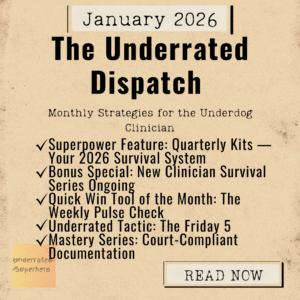
Monthly Strategies for the Underdog Clinician Featured Highlight: NEW — CLINICAL WALLET CARDS: TOOLS THAT FIT IN YOUR POCKET Your clients don’t need another handout
Difficult coworker They told you about the caseloads. The paperwork. The compassion fatigue and the clients who don’t want to be there. They prepared you—sort