Saying no to one more thing is saying yes to your longevity in this field. You can care deeply and still protect your energy. This month is about building sustainable boundaries—not walls that shut people out, but limits that keep you showing up.
💡 May Tip
🛑
Saying no to one more thing is saying yes to your longevity in this field. I can care deeply and still protect my energy.
Want the full 2026 calendar? It's included in the Winter 2026 Quarterly Kit.
Get it →
🎯
Personalize Your Calendar
The Winter 2026 Kit includes stickers to personalize your calendar with dates that matter to you—client milestones, personal reminders, or trigger dates.
💐 Mother's Day
May 10, 2026
A complicated holiday for many. Grief, estrangement, guilt about parenting during active use—check in before the day, not after the crisis.
🎗️ National Prevention Week
May 10-16, 2026
SAMHSA's annual celebration of prevention. Share what's working in your community. Use #NationalPreventionWeek to connect with others in the field.
📋 Mid-Year Prep Check-In
You're almost halfway through 2026. How are you holding up?
What's draining your energy the most right now?
Where have your boundaries slipped?
What's one thing you could stop doing—or do less of?
What would "sustainable" look like for the rest of the year?
🛡️
Boundaries Are Not Walls
This three-page worksheet helps clinicians identify where their professional boundaries are thin and take action to protect their energy. It starts with a self-assessment checklist covering common boundary issues (working through lunch, saying yes when you mean no, absorbing client emotions), then moves into a reflection on what those thin boundaries are costing you physically, emotionally, and relationally. The middle section offers ready-to-use scripts for saying no in softer ways, and the worksheet ends with a commitment section where you choose one boundary to set or strengthen this month.
Best for: Clinicians who struggle with overcommitting, feel guilty saying no, or notice they're running on empty. Especially useful for new counselors who haven't yet learned that boundaries aren't about caring less — they're about caring sustainably.
Available May 1st
💐
Mother's Day Check-In Guide
This two-page guide helps addiction counselors proactively check in with clients before Mother's Day — a holiday that can surface grief, estrangement, parenting guilt, and painful memories. It identifies who might struggle (clients who've lost mothers, lost custody, experienced abuse, or associate the holiday with past use), offers conversation openers for different situations, and provides planning questions to help clients think through the day before it arrives. There's also specific guidance for navigating grief and estrangement, plus a list of protective factors to strengthen before the holiday hits.
Best for: Addiction counselors who want to get ahead of a high-risk holiday instead of doing damage control after. Useful for any clinician working with clients who have complicated relationships with motherhood — whether as daughters, as mothers, or both.
Available May 1st
🧠
Mental Health Awareness Month
Screen for the whole person, not just the substance. SUD rarely travels alone. This month, recommit to checking what's underneath.
• Are you screening for depression and anxiety routinely?
• When was the last time you asked about trauma history?
• Do your clients know you're a safe person to talk about mental health with?
• Are you addressing your own mental health, or just your clients'?
Co-occurring disorders are the rule, not the exception. Treat the whole person.
🎒
End-of-School Stress for Parents in Recovery
Trend: As the school year ends, parents in recovery face unique stressors. Childcare arrangements shift, summer schedules are unpredictable, and routines that supported recovery may fall apart.
Watch for: Clients canceling more as summer approaches. Kids home, schedules shift, treatment becomes "one more thing to manage."
Try this: Proactively discuss summer planning. What's their childcare situation? How will their routine change? What support do they need to stay engaged in treatment?
🎓
Student Clinician?
Summer break brings its own challenges—loss of structure, returning to triggering environments, identity shifts.
June's resources are for you. Hang in there.
Part of the Justice-Involved Treatment Mastery Series Your client just had a positive drug test. You’re looking at the results. They’re looking at you. And
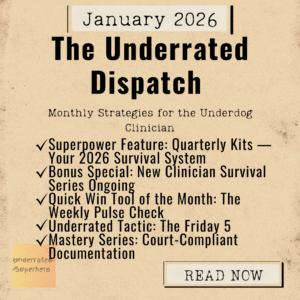
Monthly Strategies for the Underdog Clinician Featured Highlight: NEW — CLINICAL WALLET CARDS: TOOLS THAT FIT IN YOUR POCKET Your clients don’t need another handout
Difficult coworker They told you about the caseloads. The paperwork. The compassion fatigue and the clients who don’t want to be there. They prepared you—sort