If the only win that counts is sobriety, you'll miss a lot of progress—and so will your clients. A client showing up is a win. A client being honest is a win. This month is about adjusting your scoreboard.
💡 June Tip
🏆
A client showing up is a win. A client being honest is a win. Adjust your scoreboard. Not every win looks like sobriety.
Want the full 2026 calendar? It's included in the Winter 2026 Quarterly Kit.
Get it →
🎯
Personalize Your Calendar
The Winter 2026 Kit includes stickers to personalize your calendar with dates that matter to you—client milestones, personal reminders, or trigger dates.
⚠️ Fentanyl Awareness Day
June 3, 2026
Talk about it. Harm reduction saves lives—make sure clients know the risks and have Narcan access. Don't assume they know.
✊🏿 Juneteenth
June 19, 2026
Honor the day. Reflect on how systemic racism impacts your clients and your practice. Liberation is ongoing work.
👔 Father's Day
June 21, 2026
Same as Mother's Day—check in before, not after. Grief, estrangement, complicated feelings about fatherhood surface.
📋 Half-Year Check-In
You're halfway through 2026. Time for an honest assessment.
What wins have you overlooked—in your clients and in yourself?
Where are you being too hard on yourself or your clients?
What do you need to let go of for the second half of the year?
What's one thing that's working that you want to do more of?
🏆
Celebrating Small Wins
This two-page worksheet helps clinicians recalibrate how they measure success — because if the only win that counts is sobriety, you'll miss a lot of progress. It starts with a checklist of wins that often go uncelebrated (client showed up, client was honest about a slip, client set a boundary), then moves into reflection questions about how you're currently measuring success and whether those expectations are realistic. The middle section offers ready-to-use phrases for naming wins out loud with clients, and the worksheet ends with space to identify three wins from your caseload this week that you might have overlooked.
Best for: Clinicians who feel like they're failing when clients aren't abstinent, who struggle to see progress in harm reduction work, or who need a reminder that showing up, being honest, and trying again are all wins worth naming.
Available June 1st
🎓
Summer Survival Guide for Student Clinicians
This two-page guide helps student clinicians navigate summer break — a time when structure disappears, clinical identity fades, and returning home can bring its own challenges. It covers why summer can be hard (loss of routine, identity shift, isolation, financial stress, skill fade anxiety), then offers survival strategies across four areas: creating your own structure, staying connected to peers and supervisors, protecting yourself in potentially triggering home environments, and keeping up with professional development without overdoing it. The guide ends with a fill-in planning section to complete before summer begins.
Best for: Student clinicians heading into summer break who are worried about losing momentum, returning to difficult home environments, or feeling disconnected from their clinical identity. Also useful for anyone supporting students through the transition between academic years.
Available June 1st
🧠
PTSD Awareness Month
Ask about the past. It's shaping the present.
Trauma and SUD travel together more often than not. This month, recommit to trauma-informed practice:
• Are you routinely asking about trauma history?
• Do your clients feel safe enough to disclose?
• Are you watching for trauma responses disguised as "resistance"?
• Do you have referral options for trauma-specific treatment?
• Are you managing your own vicarious trauma?
You don't have to be a trauma therapist to be trauma-informed.
🏳️🌈 Pride Month
LGBTQ+ clients face unique stressors, higher rates of substance use, and often encounter discrimination in treatment settings. This month, reflect on how your practice shows up for queer and trans clients:
Are your intake forms inclusive? (Pronouns, chosen name, relationship options)
Is your language affirming—consistently, not just when you remember?
Do you have resources for LGBTQ+-specific support and community?
Are you aware of how minority stress contributes to substance use?
If you're not queer, have you examined your assumptions and blind spots?
Pride isn't just a parade. It's about safety, dignity, and being seen.
🌡️
Summer Heat & Retention Risk
Trend: Summer heat increases risk—substance-related ER visits rise. Homeless clients are especially vulnerable to heat-related complications combined with substance use.
Watch for: Clients disappearing as routines dissolve. Summer schedules, vacations, and "I'll come back in the fall" syndrome. Treatment retention drops this time of year.
Pro tip: Consider overbooking during summer months—no-shows increase. When clients do cancel, use that time wisely: catch up on documentation, professional development, or your own self-care. Don't just sit there frustrated.
Action: Check in on housing stability. Know where cooling centers are. Don't let "summer break" become treatment dropout.
Part of the Justice-Involved Treatment Mastery Series Your client just had a positive drug test. You’re looking at the results. They’re looking at you. And
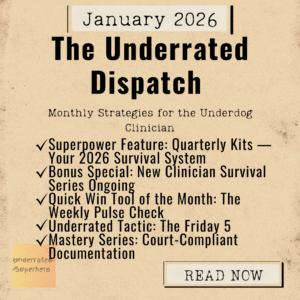
Monthly Strategies for the Underdog Clinician Featured Highlight: NEW — CLINICAL WALLET CARDS: TOOLS THAT FIT IN YOUR POCKET Your clients don’t need another handout
Difficult coworker They told you about the caseloads. The paperwork. The compassion fatigue and the clients who don’t want to be there. They prepared you—sort