You've been checking on everyone else. When's the last time you took a real day off? This month is about turning the lens inward—because you can't pour from an empty cup.
💡 July Tip
🪞
You've been checking on everyone else. When's the last time you took a real day off? I cannot pour from an empty cup.
Want the full 2026 calendar? It's included in the Winter 2026 Quarterly Kit.
Get it →
🎯
Personalize Your Calendar
The Winter 2026 Kit includes stickers to personalize your calendar with dates that matter to you—client milestones, personal reminders, or trigger dates.
🎆 July 4th
July 4, 2026 (High-Risk Holiday)
Cookouts, drinking culture, family gatherings. One of the highest-risk holidays for relapse. Check in before the long weekend—not after.
📋 Mid-Year Supervision Check
If you have a supervisor, July is a good time for a mid-year conversation. If you don't have formal supervision, find a peer or mentor to check in with.
What's going well? What are you proud of from the first half of the year?
Where are you struggling? What cases are keeping you up at night?
What do you need more support with?
Are your professional development goals on track?
How's your wellbeing—honestly?
Don't wait for your supervisor to ask. Initiate the conversation.
🪞
Mid-Year Clinician Check-In
This three-page worksheet is a wellness check for you — not a performance review. It starts with self-ratings across eight areas (physical health, emotional wellbeing, work satisfaction, relationships, financial stability, sense of purpose, work-life balance, and energy levels), then moves into a burnout warning signs checklist to help you catch what you might be minimizing. The middle section offers reflection questions about what's draining you, what's sustaining you, and what needs to change. The worksheet ends with space to commit to one concrete adjustment for the second half of the year.
Best for: Clinicians who spend all their time checking on everyone else and haven't stopped to check on themselves. Also useful for supervision conversations or peer consultation — bring your completed worksheet and talk it through.
Available July 1st
🎆
July 4th Check-In Guide
This two-page guide helps addiction counselors prepare clients for July 4th — one of the highest-risk holidays for relapse. It opens with why the holiday is particularly dangerous (alcohol is everywhere, social pressure is high, it's a long weekend, family triggers abound, heat combined with substances increases physical risk, and fireworks can be trauma triggers for some). The guide then offers planning questions to walk through with clients before the weekend, ready-to-use scripts for saying no to drinks, and a checklist of protective factors to strengthen. The final section covers what to do if clients are spending the holiday alone.
Best for: Addiction counselors who want to get ahead of a high-risk holiday weekend instead of doing damage control the week after. Schedule these conversations the week before July 4th — not the day before.
Available July 1st
✊🏾 BIPOC Mental Health Month
Check your assumptions. Then check them again.
BIPOC clients often face additional barriers to treatment: historical mistrust, cultural stigma, lack of representation, and systems that weren't built with them in mind. This month, reflect on your practice:
Are you aware of how your own cultural lens shapes your clinical approach?
Do you ask about cultural factors in substance use and recovery?
Are your treatment recommendations culturally responsive—or one-size-fits-all?
Do your clients see themselves reflected in your materials, language, and examples?
Have you examined how systemic racism impacts your clients' access to care and recovery outcomes?
Are you learning from BIPOC clinicians and communities—not just about them?
Cultural humility is ongoing work. Keep doing it.
📉
Summer Attendance Drops
Trend: Summer attendance drops. Lighter caseloads ≠ progress. Clients are on vacation, schedules are chaotic, and "I'll come back in the fall" is in the air.
Watch for: Yourself. Burnout creeps in quietly. If you're irritable, detached, or dreading work—that's data. Don't ignore it.
Action: Use the lighter caseload strategically. Catch up on documentation. Do some professional development. Plan for fall re-engagement now—reach out to clients who've drifted before September hits.
🌡️
Summer Physical Health Risks
Talk about this with clients. Summer + substances = increased physical danger. These aren't scare tactics—they're real risks that spike this time of year.
• Heat exhaustion & dehydration: Alcohol dehydrates. So do stimulants. Combined with summer heat, this can escalate quickly—especially for clients without stable housing or AC.
• Drowning: Alcohol is involved in up to 70% of water-related deaths. Pools, lakes, beaches—impaired judgment near water is deadly.
• Passing out outdoors: Losing consciousness outside in extreme heat can be fatal. Heatstroke, sunburn, vulnerability to assault or injury.
• Overdose risk increases: Heat stress combined with opioids or depressants puts extra strain on the body. Dehydration affects how substances are metabolized.
Action: Ask about summer plans involving water or outdoor activities. Discuss harm reduction: staying hydrated, having a buddy, knowing limits, having Narcan accessible.
Part of the Justice-Involved Treatment Mastery Series Your client just had a positive drug test. You’re looking at the results. They’re looking at you. And
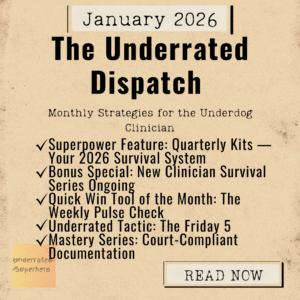
Monthly Strategies for the Underdog Clinician Featured Highlight: NEW — CLINICAL WALLET CARDS: TOOLS THAT FIT IN YOUR POCKET Your clients don’t need another handout
Difficult coworker They told you about the caseloads. The paperwork. The compassion fatigue and the clients who don’t want to be there. They prepared you—sort