

Client Relapse

In my first year working with adolescents, I had a client using opiates — Vicodin, they said. They denied using needles, but I didn’t believe them.
I did what I was supposed to do. I recommended a higher level of care. They refused. There was nothing that could force them into a higher level of care. So, I did what I could — motivational interviewing, building trust, meeting them where they were.
They died before our next session.
I went through a moral crisis after that, it was after all my first client death. I questioned everything — whether I was in the wrong field, whether I had let them down, whether I could have done something different. I was down for at least a year.
I wrote about it in grad school. My professor told me she was concerned I would burn out if I didn’t learn to tolerate loss.
I didn’t fully understand what that meant yet.
Since then, I’ve lost at least a dozen people. Active clients — accidental deaths, overdoses, long incarcerations. Past clients — overdoses, gang shootings. People I sat across from, built rapport with, believed in. It’s the hardest thing about this field. And if you’ve been doing this work for any length of time, you probably have your own list.
📚 This is Blog #10 in the New Clinician Survival Kit Series (Click to explore the series)
Weekly honest support for the struggles every clinician faces: “I hate group therapy.” “I can’t do this.” “My client hates me.” “I’m making it worse.” “I can’t say no.” “They’re going to report me.” “I’m too tired to care.” “What do I even say?” “I don’t know enough.” “They keep relapsing.”
These aren’t signs you’re failing. They’re signs you’re human.
What Grad School Taught Us About Client Relapse
When I was in grad school around 2017, I wanted to write a paper on motivational interviewing. I’d already been doing drug and alcohol counseling for a few years before I entered the therapeutic program, so I was familiar with it — I’d seen it work. But I was told not to write about it. There wasn’t enough research, they said. I should choose a different approach.

The field was still catching up to what addiction counselors already knew. So, I wrote about the old, time-honored therapeutic approaches instead. The ancient ones. The ones with enough citations to make a professor happy.
Grad school taught us what success looks like in addiction treatment: sobriety. Abstinence. Completion certificates. Graduation ceremonies.
We were trained to see relapse as a setback — something to process, something that meant starting over.
I was lucky, though. My adjunct professor specialized in drug and alcohol counseling and did a pretty good job emphasizing a modern view. But that was just a few classes, one professor. The rest of the program was still catching up.
So, when clients relapse, it feels like failure. Not just theirs. Ours.
You replay the sessions. What did I miss? What should I have said differently? Was I not confrontational enough? Too confrontational? Did I push too hard or not hard enough?
And then they relapse again. And again.
At some point, you start wondering: Am I actually helping anyone? I asked myself that more times than I’d like to admit.
What the Research Actually Says About Client Relapse
Here’s something they didn’t emphasize enough in grad school: relapse rates for substance use disorders are estimated at 40-60%. That’s comparable to relapse rates for other chronic conditions like hypertension and diabetes (NIDA, 2018).
We don’t call a diabetic a failure when their blood sugar spikes. We don’t say the treatment didn’t work when someone with hypertension has a bad reading. We adjust the plan, address the barriers, and keep going.
But in addiction treatment, we’ve been conditioned to see relapse as defeat. As evidence that something went wrong. As a reason to question our competence.
Relapse isn’t a failure of treatment. Relapse is part of the treatment process.
Redefining What Success Actually Looks Like
Once I hit what I thought was the ultimate failure — losing a client — I had no choice but to rebuild my entire framework for what success means.
It didn’t happen overnight. It happened slowly, through loss after loss, through small moments I almost missed.

What Success Started Looking Like
Success started looking different:
- A client who disappeared for six months walked back through the door. They remembered treatment as a safe place.
- A client who’s been using for fifteen years is still alive. Still showing up.
- Thirty days became sixty. Sixty became ninety. Then they relapsed — but the baseline moved.
- A client started using fentanyl test strips. Stopped using alone. Carries Narcan now.
- A former client tracked me down years later to say something I said stuck with them. I never would have known if they hadn’t come back.
None of this looks like a graduation ceremony. But it’s real progress.
When the System Doesn’t See Your Progress Regarding Client Relapse
You can document all of this. But probation officers want sobriety, not harm reduction. Courts want clean screens, not “they’re using safer now.” Your supervisor might celebrate these wins with you, but the systems your clients are tied to don’t care that the stretches got longer or that they started carrying Narcan. They want abstinence. And when that’s the only metric that counts, your actual progress becomes invisible. If you’re navigating this tension with mandated clients, check out When the Judge Says Abstinence but Evidence Says Harm Reduction — it goes deeper into how to hold both realities.
You’re Just One Peg on the Board
This is what finally helped me stop taking every relapse personally:
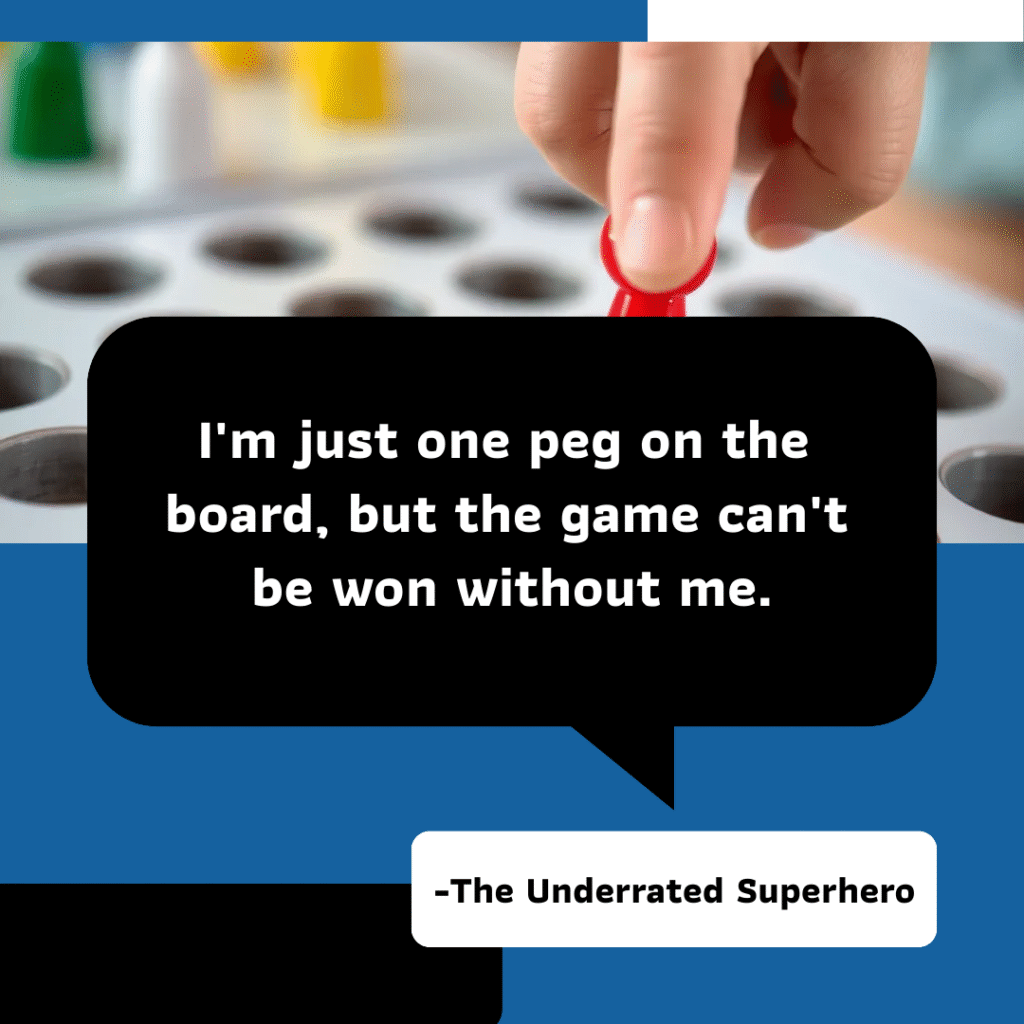
I’m just one peg on the board.
My clients have been shaped by trauma, genetics, environment, poverty, systems, relationships, and circumstances I will never fully understand. There are dozens of forces working on them at any given time — most of them working against recovery.
And the systems aren’t helping. More than 95% of people who needed drug treatment in 2023 didn’t receive it (SAMHSA, 2023). Your client might be one of the few who actually made it into your office. That alone is significant.
I’m one peg. One hour a week. One voice in a sea of noise.
That’s not me minimizing the work. It’s me being honest about what I can control.
I can show up consistently. I can offer tools. I can hold hope when they can’t hold it for themselves. I can be the person who doesn’t give up on them.
But I can’t want it more than they do. And I can’t control what happens when they leave my office.

The Long Game Regarding Client Relapse
The hardest part of this work isn’t learning interventions or memorizing DSM criteria. It’s learning to play the long game.
You plant seeds you may never see bloom.
You say things in session that seem to land nowhere — and three years later, a client tells you that sentence changed everything.
You work with someone for months with no visible progress — and five years later, they’re sponsoring other people in recovery.
You don’t get to see the ending. That’s the deal.
Here’s what the research actually shows: the median number of serious recovery attempts before resolving a substance use problem is 2 — though the range spans from 0 to 100, with certain subgroups needing substantially more (Kelly et al., 2019). That means for some clients, you’re attempt number one. For others, you’re attempt number seven. Either way, you’re part of the process.
And here’s the hopeful part: after 5 years of continuous recovery, the risk of relapse drops to less than 15% (Recovery Research Institute). The long game works. You just don’t get to see the ending. The question isn’t “did my client get sober?” The question is “did I do my part while I had them in front of me?”
Shifting from Outcome Goals to Process Goals
Outcome Goals vs. Process Goals
Shifting your focus to what actually matters
If you’re measuring your success by client outcomes, you will burn out. It’s not a matter of if. It’s when.
Client outcomes are not in your control. What’s in your control is the process.
You did your job. Their recovery is their responsibility. That’s not cold. That’s sustainable.
What to Track That Actually Matters
If negative drug screens and sobriety dates aren’t the only measure of success, what should you be paying attention to?
What to Track That Actually Matters
Beyond clean drug screens and sobriety dates
Talking About Client Relapse (With Clients and Yourself)
The way you talk about relapse shapes how your clients experience it.
If you treat relapse as failure, they’ll feel like failures. They’ll avoid telling you the truth. They’ll disappear instead of coming back.
If you treat relapse as data, they’ll bring it to session. They’ll let you help them learn from it. They’ll see it as a setback, not an ending.
Try:
- “What happened before the relapse? Let’s look at what got you there.”
- “You had 47 days. That’s 47 more than last time. What worked during that stretch?”
- “Relapse doesn’t erase your progress. You still learned everything you learned.”
And when you talk to yourself after a client relapses:
- “I did my part. Their journey isn’t over.”
- “This isn’t proof that I failed. This is proof that addiction is hard.”
- “I’m one peg on the board. I played my position.”
And for every client who comes back to tell you, there are probably others who didn’t. Others who got sober, or got safer, or got their life back — and you’ll never know. You were still part of their story.
The Work That Stays With You
I still think about the client who died in my third year. I don’t think about them with guilt anymore — but I do think about them.
That loss taught me something my professor tried to tell me but I couldn’t learn from words. I had to live it.
This work will cost you something. You will carry names and faces with you. You will lose people you believed in.
But you’ll also be part of something most people will never understand — the messy, nonlinear, brutal, beautiful work of helping people fight for their lives.
Some of them will make it. Some of them won’t. And your job isn’t to control the outcome.
Your job is to keep showing up.
The Bottom Line About Client Relapse
Relapse Rates: Addiction vs. Other Chronic Conditions
The comparison nobody told you about in grad school
The takeaway: We don’t call a diabetic a failure when their blood sugar spikes. Why do we treat addiction differently?
They keep relapsing. That’s true.
And you keep showing up. That’s also true.
Relapse isn’t proof that you failed. It’s proof that you’re working with one of the hardest conditions to treat. It’s proof that your clients are fighting something bigger than one hour a week can fix.
An estimated 29.3 million U.S. adults — over 11% of the population — report having resolved a significant substance use problem (Recovery Research Institute, 2024). Recovery happens. You’re part of how it happens.
You’re not failing. You’re playing the long game.
Redefine success. Measure what you can control. Let go of the rest.
And when a client comes back — whether it’s after a week, a year, or a decade — remember they came back because somewhere in their mind, treatment was worth trying again.
You had something to do with that.

Next Week: We’re tackling another brutal truth that keeps clinicians up at night. See you then!
Until Next Week | The Underrated Superhero
© 2025 The Underrated Superhero LLC. All Rights Reserved.
Resources Referenced in This Post
- NIDA: Drugs, Brains, and Behavior – Treatment and Recovery – Research showing relapse rates for substance use disorders (40-60%) are comparable to other chronic conditions like hypertension and diabetes
https://nida.nih.gov/publications/drugs-brains-behavior-science-addiction/treatment-recovery - SAMHSA 2023 National Survey on Drug Use and Health – Data showing more than 95% of people who needed drug treatment didn’t receive it
https://www.samhsa.gov/data/report/2023-nsduh-annual-national-report - Recovery Research Institute: Recovery Statistics – Research on recovery attempts, long-term outcomes, and the finding that after 5 years of continuous recovery, relapse risk drops to less than 15%
https://www.recoveryanswers.org/research-post/how-many-try-to-resolve-a-substance-use-problem/ - Kelly et al., 2019 – Recovery Attempts Research – Study showing the median number of serious recovery attempts before resolving a substance use problem is 2, with ranges from 0 to 100
https://pubmed.ncbi.nlm.nih.gov/30516997/
Additional Support from The Underrated Superhero
- 📖 When the Judge Says Abstinence but Evidence Says Harm Reduction – How to navigate the tension between court requirements and evidence-based care with mandated clients
- 📝 Free Clinical Tools – Downloadable resources to support your work with clients in recovery. Requires free account.
Previous Posts in the New Clinician Survival Kit Series
- 📖 I Can’t Do This: When Imposter Syndrome for Therapists Hits Hardest
- 📖 I’m Making It Worse: Fear of Harming Clients
- 📖 I’m Too Tired to Care: Burnout and Compassion Fatigue
See all posts in the New Clinician Survival Kit Series
