
June
"celebrating small wins"
If the only win that counts is sobriety, you'll miss a lot of progress — and so will your clients. A client showing up is a win. A client being honest about a slip is a win. This month is about adjusting your scoreboard while the work underneath stays heavy: trauma, identity, history, and the long unstructured stretch of summer ahead.
📌 Note: All downloadable resources from The Underrated Superhero require at least a free account to access. Create your free account →
⚕️ Clinical note: Educational content meant to support your clinical thinking — not replace your training, supervision, or judgment.
Key dates: Fentanyl Awareness Day (6/3), Elder Abuse Awareness Day (6/15), Juneteenth (6/19), Father's Day (6/21), International Day Against Drug Abuse (6/26), PTSD Awareness Day & HIV Testing Day (6/27).
Themes: trauma and SUD, affirming care, racial trauma and liberation, men and help-seeking, harm reduction, summer retention risk.
💡 June Tip
📋 Half-Year Check-In
You're halfway through 2026. Time for an honest assessment — not a performance review.
- What wins have you overlooked — in your clients and in yourself?
- Where are you being too hard on yourself or on the people on your caseload?
- What do you need to let go of before the second half of the year?
- What's one thing that's actually working that you want to do more of?
✅ June Checklist
PTSD Awareness Month. Pride. Juneteenth. Father's Day. Summer starts. Here's what to focus on.
💡 Tip: Screenshot this list or bookmark this page. Come back at the end of the month to see what you actually did.
📅 June Awareness Dates
Click any card to see related resources.
💚 Feeling overwhelmed? Pick one or two that connect with your caseload right now — and come back for the rest later.
PTSD Awareness Month
Trauma and SUD travel together more often than not. Ask about the past — it's shaping the present, and your clients are often coping with what no one ever asked them about.
📊 PTSD and SUD: The Clinical Reality
- Co-occurrence is the rule, not the exception. Studies estimate that 25–49% of people in SUD treatment meet criteria for PTSD, with rates higher in women, veterans, and justice-involved clients (National Center for PTSD)
- Trauma usually comes first. For most clients with co-occurring PTSD and SUD, the trauma preceded the substance use — and the substance use is, in part, an attempt to manage symptoms no one taught them another way to handle
- "Resistance" is often a trauma response. Avoidance, hypervigilance, dissociation, and shutdown can look like non-compliance, defiance, or disengagement to clinicians who aren't watching for it
- Integrated treatment works better. Treating SUD and PTSD together — rather than sequentially or in separate silos — produces significantly better outcomes for both (National Center for PTSD)
💡 Use This Month in Session
- Ask the question. "Have you experienced things that were really hard or overwhelming? We don't have to go into detail — I just want to know it's on my radar." Acknowledgment without excavation.
- Screen with a tool, not a hunch. The PCL-5 is free, validated, and takes ten minutes. If you're not using a standardized PTSD screen, this is the month to start.
- Watch for trauma responses disguised as "resistance." Late arrivals, missed sessions, flat affect, sudden topic changes — these can be the symptoms, not the problem.
- Manage your own vicarious trauma. If you're doing this work and not feeling its weight, that's information too. Supervision matters. Consultation matters. Your own therapy matters.
🔗 External Resources
🏛 National Center for PTSD (VA) ↗ 📋 NIMH: Post-Traumatic Stress Disorder ↗ 📝 PCL-5: PTSD Checklist (Free Assessment Tool) ↗ 🧠 SAMHSA: PTSD Resources ↗ 🌐 International Society for Traumatic Stress Studies ↗🛒 Related Items in the Shop
Tools for trauma-informed practice and clinician self-care:
LGBTQ+ Pride Month
LGBTQ+ clients face higher rates of substance use, mental health conditions, and discrimination in treatment. Pride isn't a parade — it's whether your practice is actually a safe place to land.
📊 LGBTQ+ Clients and SUD: The Clinical Reality
- Substance use rates are higher. LGBTQ+ adults experience substance use disorders at rates significantly higher than the general population — and the gap is widest among bisexual and transgender adults (SAMHSA 2023 NSDUH)
- Minority stress is the driver, not identity. The elevated risk isn't about being queer or trans — it's about chronic exposure to discrimination, rejection, violence, and the daily work of navigating a world that wasn't built for you
- Discrimination in treatment is real. LGBTQ+ clients report being misgendered, deadnamed, having their identity treated as a "phase," or being told their orientation contributed to their addiction. Many disengage from care because of it.
- Trans clients face the steepest barriers. Insurance denials, gendered programming, lack of affirming providers, and active discrimination compound. Trans clients in your caseload have likely been through more than you know.
💡 Affirming Practice This Month
- Audit your intake forms. Pronouns. Chosen name AND legal name (with a clear explanation of why you need both). Relationship status options beyond "married/single/divorced." Gender options beyond two boxes.
- Get the language right — consistently. Affirming language isn't a Pride Month performance. Using a client's pronouns once and then slipping the next week is worse than not using them at all.
- Address minority stress directly. "Some of what you're carrying is about you and your story — and some of it is about navigating a world that's hard on people like you. Both are real."
- Don't make clients educate you. Read. Train. Consult. The labor of teaching you about their identity is not the client's job — especially not on the clock they're paying for.
🔗 External Resources
🏛 SAMHSA: Behavioral Health for LGBTQI+ Populations ↗ 💛 The Trevor Project (LGBTQ+ Youth Crisis Support) ↗ 📞 Trans Lifeline — Peer Support by Trans People for Trans People ↗ 🌈 GLMA: Health Professionals Advancing LGBTQ+ Equality ↗ 🤝 PFLAG — Family and Ally Resources ↗🗺️ Explore the Interactive Board
🗂️ LGBTQIA+ Interactive Board — Affirming resources and clinical guides Member📚 Related Resources in the Library
National Fentanyl Awareness Day
The supply is contaminated. Harm reduction saves lives. Don't assume your clients know the risks or have Narcan — make it concrete.
📊 The Fentanyl Reality
- Fentanyl is in everything. Counterfeit pills, cocaine, methamphetamine, heroin — and increasingly in supplies clients don't expect. Even clients who don't use opioids are at overdose risk from contamination.
- It's the leading driver of overdose deaths. Synthetic opioids — primarily fentanyl — are responsible for the majority of overdose fatalities in the U.S.
- Tolerance is a moving target. Clients returning to use after a period of abstinence — discharge from inpatient, release from incarceration, post-detox — are at acutely elevated overdose risk because tolerance drops while supply potency rises
- Narcan is over-the-counter. No prescription needed. Available at pharmacies, often free through community programs. "Did your client leave with Narcan?" should be a question your program tracks.
💡 What to Cover With Every Client
- "Do you have Narcan?" — direct, no assumption. If no: where to get it, how to use it, who else in their life should have it.
- "Do you know what fentanyl test strips are?" — for clients using stimulants, pressed pills, or any non-pharmaceutical supply. Cocaine and meth users die from fentanyl too.
- For clients returning to use: Name the tolerance drop directly. "Your tolerance is lower than it used to be. The supply is stronger than it used to be. Both things together are the deadliest combination — let's talk about how to stay alive if you do use again."
- Be the clinician who doesn't add to the stigma. Clients who feel judged hide their use. Hidden use is more dangerous use. Harm reduction is clinical care.
🔗 External Resources
🏛 CDC: Stop Overdose — Fentanyl Facts ↗ 📋 SAMHSA: Overdose Prevention and Response ↗ 💚 National Harm Reduction Coalition ↗ 📞 Never Use Alone — 1-800-484-3731 ↗🛒 Related Items in the Shop
Tools for harm reduction and overdose prevention:
📚 Related Resources in the Library
World Elder Abuse Awareness Day
Older adults with SUD are one of the most invisible populations in your caseload — and one of the most vulnerable to abuse, financial exploitation, and undertreatment.
📊 Older Adults and SUD: The Quiet Crisis
- SUD in older adults is rising. Alcohol misuse, prescription medication misuse, and opioid use disorder among adults over 65 have been climbing for years — and the population is aging
- It's often missed. Symptoms get attributed to "aging" — confusion, falls, mood changes, sleep disturbance. The substance use underneath goes unscreened.
- Elder abuse and SUD intersect. Older adults with cognitive impairment or substance use issues are at elevated risk for financial exploitation, neglect, and physical abuse — often by family members. The abuser may be the person bringing them in.
- Polypharmacy compounds risk. Older adults often take multiple medications. Alcohol or unprescribed substances on top create acute medical risk — and providers may not be screening for it.
💡 What to Ask, What to Notice
- Screen older clients for SUD. The CAGE-AID or AUDIT works. Don't assume someone isn't using because they're 70.
- Ask about who manages their money and medications. "Who helps you with your finances? Your prescriptions?" Opens the door without accusation.
- Ask alone. If an adult child or caregiver always insists on being in the room, find a way to see the older client privately. Abuse rarely discloses with the abuser present.
- Know your reporting obligations. Adult Protective Services in your state. Long-term care ombudsman. Have the numbers before the situation appears.
🔗 External Resources
🏛 National Center on Elder Abuse ↗ 🤝 Eldercare Locator — 1-800-677-1116 ↗ 📋 SAMHSA: Substance Use and Older Adults ↗🛒 Related Items in the Shop
Tools for working with older adult clients:
Juneteenth
Liberation is ongoing work — and your Black clients are navigating a behavioral health system that wasn't built for them. Acknowledge the day. Keep doing the work the other 364.
📊 Racial Disparities in SUD and Mental Health Treatment
- Black Americans are less likely to receive SUD treatment than white Americans with similar levels of need — and when they do, they are more likely to be referred through the criminal-legal system rather than voluntarily (SAMHSA)
- The overdose crisis hit Black communities later and harder. Overdose deaths among Black Americans rose 44% from 2019 to 2020 alone, and continued rising through 2023 while deaths among white Americans declined — public attention and resources lagged (CDC Vital Signs)
- Medication for opioid use disorder is unequally prescribed. Buprenorphine — the evidence-based standard — is prescribed to white patients at roughly twice the rate of Black patients, even when clinical need is similar (NEJM 2023)
- Racial trauma is clinical. The chronic stress of racism, vicarious trauma from media exposure, and direct experiences of discrimination affect mental and physical health. It belongs in your clinical assessment.
💡 What This Means for Your Practice
- Name racial trauma when it shows up. "Some of what you're describing is what racism does to a body and a nervous system. We can work with that — but I want you to know I see it."
- Examine your own biases. Implicit bias affects diagnosis, treatment intensity, medication decisions, and the warmth in your voice. It's not personal — and addressing it is your job, not your client's.
- Audit medication referrals. Are you offering buprenorphine, methadone, and naltrexone equitably across your caseload? If not, why not?
- Cultural humility isn't a workshop you completed. Do the reading. Find consultation. Build community-based referral options. The work is ongoing.
🔗 External Resources
🏛 SAMHSA: Behavioral Health for Black/African American Communities ↗ 💚 Boris Lawrence Henson Foundation ↗ 🤝 Therapy for Black Girls — Provider Directory ↗ 🤝 Therapy for Black Men — Provider Directory ↗ 🧠 NAMI: Black/African American Mental Health Resources ↗🗺️ Explore the Interactive Board
🗂️ BIPOC Interactive Board — Resources and clinical guides for culturally responsive practice Member🛒 Related Items in the Shop
Tools for culturally responsive practice and bias work:
Father's Day — Its Own Complicated Holiday
Fathers in active use. Fathers who lost custody. Men whose own fathers had SUD. Men working hard not to repeat patterns. Father's Day carries its own clinical weight — check in before the day, not after.
💡 Who to Check In With Proactively
- Clients who have lost their fathers — to death, abandonment, or estrangement. Grief surfaces around Father's Day even when the relationship was complicated.
- Fathers who have lost custody of their children — to DCFS, divorce, or active use. The day can be an acute reminder of what's been lost.
- Clients estranged from their own children — adult children who won't speak to them, or whose contact is conditional. Father's Day amplifies that distance.
- Clients whose fathers struggled with addiction — and who now find themselves walking the same road, or working hard not to.
💡 The Specific Clinical Weight
- Father's Day intersects with Men's Mental Health Month. The double pressure of "be a good father" and "don't talk about your feelings" lands hard in the same week. This isn't coincidence — work with both.
- Ask about their relationship with their own father, not just their kids. Many men in your caseload are still doing the clinical work of unpacking what they learned about manhood, fatherhood, drinking, and rage from the man who raised them.
- For men who repeated the pattern: The grief of becoming the father they didn't want to be is one of the heaviest clinical experiences in recovery. Make room for it. Don't rush to reframe.
- For men working to break the pattern: Acknowledge the labor. Choosing not to repeat what was done to you takes daily, exhausting work — and it rarely gets named as the clinical achievement it is.
🛒 Related Items in the Shop
Tools for navigating complex family relationships in recovery:
📚 Related Resources in the Library
Men's Mental Health Month
Many men present with the substance and not the depression underneath. With the rage and not the grief. With the work problem and not the despair. Not every man fits the pattern — but enough do that it's worth asking the second question.
📊 Men and Mental Health: The Clinical Reality
- Men die by suicide at significantly higher rates than women — approximately 4 times higher in the U.S. (38,977 male vs 9,847 female suicide deaths in 2024) — and are less likely to be in mental health treatment when they do (AFSP / CDC 2024)
- Substance use is often the first symptom that gets named. Depression, anxiety, PTSD, and grief frequently show up as drinking, using, working too much, or rage — long before they show up as a complaint about mood
- The script can make help-seeking harder. "Be strong," "handle it," "don't be weak" — clients carry decades of these messages. Some came from their fathers. Some came from your own training.
- Men of color face compounded barriers. Racialized expectations of strength, mistrust of behavioral health systems with documented bias, and culturally specific stigma all stack
💡 In Session With Men This Month
- Look past the presenting complaint. "I hear you about the drinking. What's underneath it?" Some clients won't volunteer the answer — but they'll often tell you if you ask.
- Screen for depression and suicide directly. PHQ-9. Columbia Suicide Severity Rating Scale. Use the tools. Don't rely on "he seems okay."
- Make space for grief. Some men haven't been given a vocabulary for it. Loss of a father, a marriage, a job, a version of themselves — these are clinical losses, not just life events.
- Address isolation as a clinical problem. "Who do you call when it's bad?" If the answer is "no one" or "you," that's a treatment priority.
🔗 External Resources
🤝 Men's Health Network ↗ 📞 988 Suicide and Crisis Lifeline ↗ 🧠 HeadsUpGuys — Resources for Men with Depression ↗ 🤝 Therapy for Black Men — Provider Directory ↗🗺️ Explore the Interactive Board
🗂️ Men-Focused Interactive Board — Resources and clinical guides for working with men in recovery Member🛒 Related Items in the Shop
Tools for mental health and stigma work with men:
📚 Related Resources in the Library
International Day Against Drug Abuse and Illicit Trafficking
A UN observance with a global lens. Whatever the politics of "the war on drugs," your clients are navigating a contaminated supply, criminalization, and stigma. Harm reduction is clinical care.
📊 The Global and Domestic Picture
- This is a UN observance — adopted in 1987 to strengthen international action against drug trafficking and use. The framing has historically been criminal-legal; the public health framing is more recent and still contested.
- Criminalization shapes your caseload. Whether a client comes to you through drug court, probation, child welfare, or "voluntarily" with a charge hanging over them, the criminal-legal system is part of the clinical room — even when no one names it.
- Harm reduction saves lives that abstinence-only approaches don't. Naloxone distribution, fentanyl test strips, syringe service programs, and medication for opioid use disorder all have decades of evidence behind them
- Stigma is the through line. Whether the messaging is "war on drugs," "just say no," or "personal responsibility," the people in your office have been told they're the problem. Your job is to interrupt that — not amplify it.
💡 What This Means in Session
- Know harm reduction tools. Narcan access, test strips, syringe service programs, MOUD, safer-use messaging. If you can't speak to these confidently, that's the gap to close.
- Acknowledge the criminal-legal weight. For clients with charges, court mandates, or probation, the clinical relationship is shaped by what they can and can't say. Be explicit about what gets shared and what doesn't.
- Don't moralize. "Drug abuse" is the framing the day uses. Your clients live with the framing. You don't have to repeat it.
- Connect to community organizing. Drug policy reform, harm reduction advocacy, and clinician-led efforts to change criminal-legal entanglement with treatment are happening. Find them if you want to be part of them.
🔗 External Resources
🌐 United Nations Office on Drugs and Crime ↗ 💚 National Harm Reduction Coalition ↗ ⚖️ Drug Policy Alliance ↗ 🏛 SAMHSA: Harm Reduction Resources ↗🗺️ Explore the Interactive Board
🗂️ Justice-Involved Interactive Board — Resources and clinical guides for working with criminal-legal-system-involved clients Member🛒 Related Items in the Shop
Tools for harm reduction and justice-involved practice:
National PTSD Awareness Day
A focused day within the month. Use it to recommit, retrain, or refer — and to check on the trauma you carry from doing this work.
💡 Making the Day Count
- Recommit to screening. If you've been "meaning to" start using the PCL-5 routinely, today is the day. Print it. Put it in your intake packet. Use it.
- Refresh your knowledge. A free online training. A book chapter. A consultation conversation. Trauma work changes — your training should too.
- Check on your veteran clients. Or your justice-involved clients. Or the clients who've never named the assault, the accident, the loss. June 27 is a good day to ask the question you've been holding.
- Check on yourself. Vicarious trauma is real. When was the last time you talked about what this work costs you — to a supervisor, a consultation group, or your own therapist?
🔗 External Resources
🏛 VA: PTSD Awareness Month and Day ↗ 🌐 National Child Traumatic Stress Network ↗🛒 Related Items in the Shop
Tools for trauma-informed practice on the focused day:
📚 Related Resources in the Library
National HIV Testing Day
SUD, injection use, sexual risk, and HIV are clinically entangled — and many of your clients haven't been tested recently, or ever. Know what to ask, where to refer, and how to talk about it.
📊 HIV, SUD, and What Clinicians Should Know
- Injection drug use remains a significant route of HIV transmission. Shared equipment, contaminated supply, and lack of access to syringe services all contribute
- Substance use also increases sexual transmission risk. Stimulant use, in particular, is associated with elevated sexual risk-taking — and clients in active use may not be in a position to consistently negotiate safer sex
- PrEP and PEP are underused. Pre-exposure prophylaxis and post-exposure prophylaxis are highly effective and underprescribed — especially to clients with SUD, who are often perceived as "non-compliant" before they've been offered
- U=U is settled science. Undetectable equals untransmittable. People living with HIV who are on effective treatment do not transmit the virus sexually. Many clients — and clinicians — still don't know this.
💡 What to Ask and Where to Refer
- "When was your last HIV test?" — direct, non-judgmental, standard. Make it part of intake and annual check-ins, not a flag.
- "Do you know what PrEP is?" — for clients with risk factors. Many haven't been offered it. Some have been refused it because of substance use status.
- Know your local testing options. Many community health centers offer free, rapid, confidential testing. Some offer at-home testing. Have the resource ready.
- Connect to harm reduction. Syringe service programs reduce HIV transmission and connect people to testing, treatment, and broader care. Know what's in your community.
🔗 External Resources
🏛 CDC: HIV Testing ↗ 📍 CDC: Find HIV Testing Near You ↗ 📋 HIV.gov — Federal HIV Information ↗ 🧠 SAMHSA: HIV/AIDS and Substance Use ↗🛒 Related Items in the Shop
Tools for HIV awareness and education:
📚 Related Resources in the Library
Celebrating Small Wins
This two-page worksheet helps clinicians recalibrate how they measure success — because if the only win that counts is sobriety, you'll miss a lot of progress. It starts with a checklist of wins that often go uncelebrated (client showed up, client was honest about a slip, client set a boundary), then moves into reflection questions about how you're currently measuring success and whether those expectations are realistic. The middle section offers ready-to-use phrases for naming wins out loud with clients, and the worksheet ends with space to identify three wins from your caseload this week that you might have overlooked.
Best for: Clinicians who feel like they're failing when clients aren't abstinent, who struggle to see progress in harm reduction work, or who need a reminder that showing up, being honest, and trying again are all wins worth naming.
Access ResourceFather's Day in Recovery — Clinician + Client Set + Wallet Card
A paired resource set for Father's Day. The Clinician + Client Set is a two-page PDF — page one is a half-page clinician guide covering who the material is for, when to use it, how to fill in the wallet card collaboratively in session, group facilitation notes, and a callout on countertransference. Page two is a full client infographic with five recovery-affirming reminders for fathers navigating Father's Day in early sobriety. The companion Wallet Card is a printable carry tool with the same five reminders on the front (untitled so clients can carry it discreetly), and crisis hotlines plus three Name/Phone rows on the back to be filled in with the client in session. The collaborative fill-in is where the clinical work happens.
Best for: Addiction counselors working with fathers in early recovery, men working toward reunification, and any client navigating Father's Day with grief, guilt, custody loss, or family rupture. Particularly useful for group facilitators — twelve men leaving group with the same card in their pockets is a clinical intervention worth naming.
Brief Trauma Intervention in SUD Treatment + Containment Card
This month's clinical anchor — built for the question every SUD counselor faces: how to stay in scope without staying on the sidelines when trauma is in the room. The main document is a clinical decision frame walking through what's within brief intervention scope, how to plan containment before opening a trauma conversation, what to ask referral sources, how to document accurately without overclaiming, and what to do when a session goes sideways. It addresses cultural considerations for Black, Latino/Hispanic, and justice-involved clients whose trauma is consistently missed clinically. The Containment Quick Reference Card is the companion — a two-sided in-session tool covering when to stay with it, when to pin it, when to redirect, and what to do when grounding is the intervention (dysregulation, dissociation, shutting down, anger, leaving).
Best for: SUD counselors, addiction counselors, and mental health clinicians whose clients carry trauma history alongside the substance use — which is most of them. Especially useful for clinicians who feel either reckless or avoidant about trauma content in session and want a concrete frame for staying capable, contained, and never reckless.
💬 Bring to Supervision This Month
Not sure what to talk about in your next supervision? Try one of these:
- → "I think trauma is underneath the substance use with one of my clients. Where does my role end and a trauma therapist's begin?"
- → "I'm counting wins differently with different clients on my caseload. Is bias shaping how I'm measuring progress?"
- → "I have an LGBTQ+ client who I think is testing whether I'm safe. What am I missing?"
- → "Summer is starting and I'm worried about losing three or four clients. Can we talk retention strategy?"
- → "I'm carrying my clients' stuff home and don't know how to put it down. Can we talk about my vicarious trauma?"
💡 Tip: Screenshot one of these and bring it to your next 1:1. Sometimes the best supervision starts with a good question.
📝 Related Reading
"I Don't Practice What I Preach" — Therapist Self-Care
Not the burned-out version. The one about being wired for intensity — and still not doing the things you tell clients to do.
"I'm Too Tired to Care" — Compassion Fatigue
When the emotional flat line hits before you've even named what's happening. What it looks like and what it actually costs you.
"I'm Worried My Client Is Hopeless" — When Doubt Creeps In
The thought almost nobody says out loud. What it means clinically — and what it means about you.
Navigating a Trauma-Informed System That's Still Not Trauma-Informed
The system says it's trauma-informed. Your clients' experiences say otherwise. What to do when the two are in conflict.
"I Can't Say No" — Boundaries in Clinical Work
Where the clinical role ends and the client's life begins. And why the gap between what you teach about limits and what you practice keeps getting wider.
Coming in July
BIPOC Mental Health Month, Disability Pride Month, and Independence Day. Clinical resources for culturally responsive care, disability-affirming practice, and the mid-summer relapse risk no one talks about.
"Mid-Year Check-In: Are You Okay?"
📰 October 2026 Newsletter – The Underrated Dispatch
Monthly Strategies for the Underdog Clinician This is Vol 15 of The Underrated Dispatch. FEATURED HIGHLIGHT: Reading AI: Clinical Judgment in AI-Assisted Practice When I
It Recommended the Safe Thing.
AI Training Data Bias I was drafting a note for a client with high acuity. Everything I put in front of the tool was cleansed
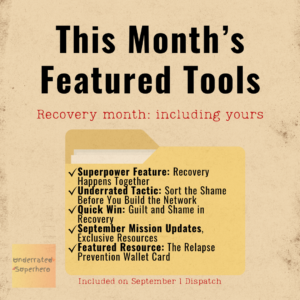
📰 September 2026 Newsletter – The Underrated Dispatch
Monthly Strategies for the Underdog Clinician This is Vol 14 of The Underrated Dispatch. FEATURED HIGHLIGHT: Recovery Happens Together September is National Recovery Month. This

It Folded. That Doesn’t Make You Right.
AI Changes Its Answer Before I go further: nothing about this involves a tool with access to our records. It’s drafting work, done inside whatever

Have You Ever Used? — Self-Disclosure and the Rule I Never Questioned
Therapist Self-Disclosure “I sit here and tell you all this stuff about me and you can’t even tell me that.” I’ve heard some version of
It Feels Like Being Right.
AI Confirmation Bias Here’s something that happens in my own workflow — and it happens with a tool I’ve spent two years instructing to argue