
When mandated doesn’t have to mean meaningless in justice-involved clients treatment
Sarah sits across from you for the first time, arms crossed, eyes fixed on the floor. Court-ordered. Six months of treatment or face jail time. She’s twenty minutes late, and when you ask how her week went, she shrugs and mutters “fine.” Your supervisor’s voice echoes in your head: “These justice-involved clients treatment need firm boundaries. Don’t let them manipulate you.”
But what if everything we think we know about “non-compliant” justice-involved clients treatment is wrong?
The Compliance Trap in Justice-Involved Clients Treatment

It’s worth noting that traditional addiction treatment was built around voluntary participation—clients who chose to be there, who could leave if they wanted. Then we took these same approaches and applied them to justice-involved populations, adding one crucial element: consequences for non-compliance.
The result? Unfortunately, this approach creates a system that often escalates rather than heals. We label missed appointments as “manipulation.” We interpret emotional dysregulation as “defiance.” We respond to trauma reactions with increased restrictions.
The Real Story Behind “Non-Compliance” in Justice-Involved Clients Treatment
When Maria doesn’t show up to group therapy, the traditional response is clear: document the absence, issue a warning, prepare the violation report. But what if Maria didn’t show because:
- Her housing situation is unstable and she spent the morning finding a place to sleep tonight
- She’s experiencing withdrawal symptoms but fears admitting ongoing use will send her back to jail
- The group format triggers her social anxiety, rooted in years of courtroom appearances where speaking up meant negative consequences
- Maria’s working three part-time jobs to pay court fees and literally couldn’t afford to miss work
The question isn’t whether Maria is compliant—it’s whether our treatment approach is meeting her where she is. These scenarios aren’t hypothetical—they reflect the documented realities facing justice-involved populations. According to the Bureau of Justice Statistics, individuals in the criminal justice system face significantly higher rates of homelessness, unemployment, and untreated mental health conditions compared to the general population, creating systemic barriers that traditional compliance-focused approaches fail to address.
Beyond Punishment: A Different Framework for Justice-Involved Clients Treatment
Given these realities, justice-involved clients treatments need us to think differently about engagement, motivation, and success. This means:
Recognizing Trauma Responses vs. Willful Defiance That client who seems “resistant” might be operating from a nervous system stuck in survival mode. Years of system involvement teach people that authority figures are threats, not helpers. This aligns with established trauma-informed care principles from the National Child Traumatic Stress Network, which emphasize that trauma-informed approaches require understanding these protective mechanisms rather than interpreting them as defiance or manipulation.
Understanding Competing Priorities When someone is facing homelessness, food insecurity, or family crisis, showing up to counseling might not be their most urgent need. This isn’t lack of motivation—it’s basic human prioritizing.
Reframing “Mandated” Treatment Following this logic, instead of “you have to be here,” what if we said “you’re here because someone recognized you deserve support”? Small shifts in language can transform the entire therapeutic relationship.
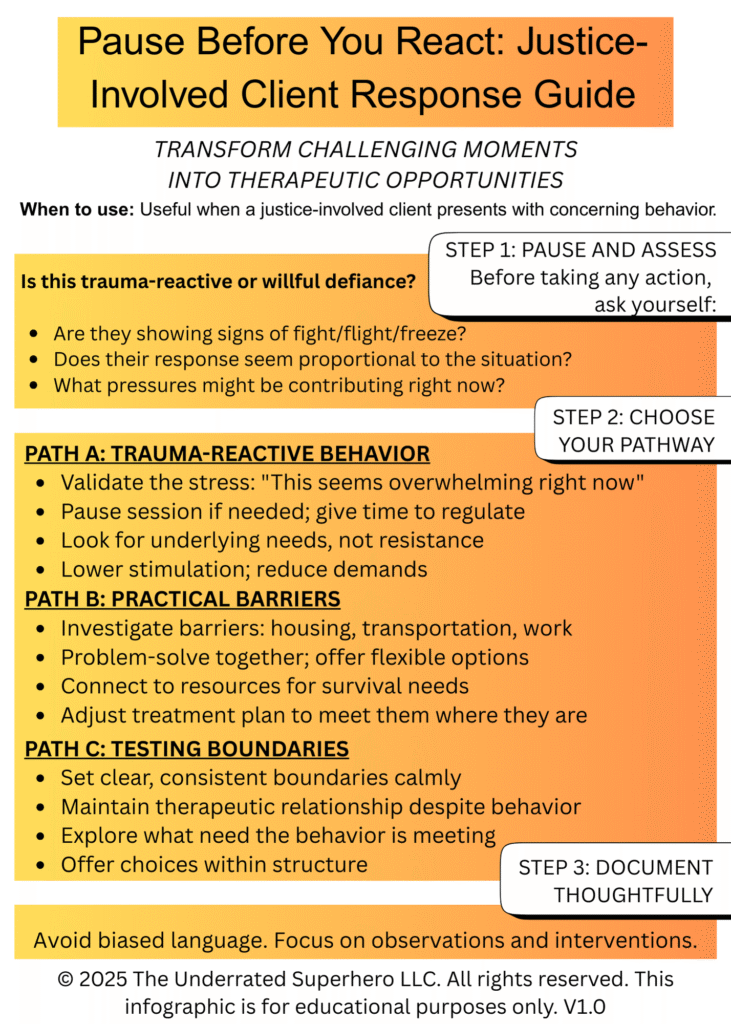
The Graded Response Revolution
The most powerful tool we have isn’t stricter consequences—it’s learning to pause before we react. When something goes “wrong” in treatment, we have a choice:
- Escalate: Issue warnings, increase restrictions, prepare violation reports
- Investigate: Ask what happened, explore barriers, problem-solve together
- Support: Adjust treatment to meet current needs, connect to resources, maintain therapeutic relationship
What this means is, this isn’t about lowering standards or enabling harmful behavior. It’s about recognizing that sustainable change happens through connection, not coercion.
Figure 1: Decision-Making Framework for Justice-Involved Client Challenges
This simplified tool is adapted from our comprehensive Graded Response Planning framework. For complex scenarios involving substance use, family dynamics, or legal complications, the full decision tree provides additional pathways.
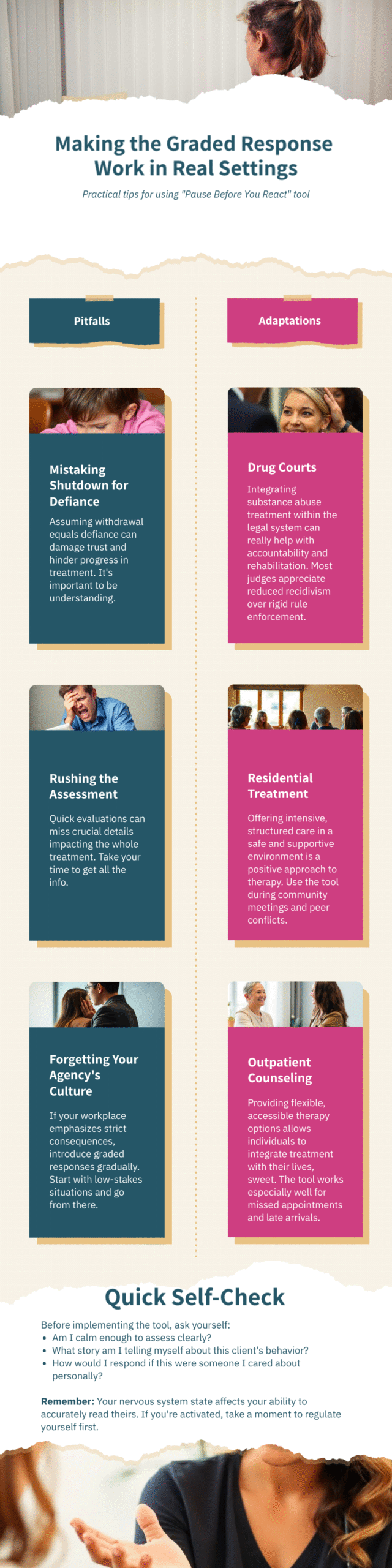
While having the right framework is essential, successfully implementing this approach in real clinical settings requires understanding common obstacles and how to navigate them.
Figure 3: Practical Implementation Guide for Trauma-Informed Responses
Common obstacles and setting-specific adaptations for implementing graded response approaches with justice-involved clients treatment, including strategies for navigating organizational resistance and maintaining clinical effectiveness across different treatment environments.
What This Means for Justice-Involved Clients Treatment
Ultimately, working with justice-involved clients treatment requires us to become comfortable with complexity. Success might look like:
- A client who relapses but calls you instead of disappearing
- Someone who misses appointments but shows up to crisis sessions
- That client who takes six months to trust you enough to share their real struggles
These aren’t failures—they’re evidence that your approach is working. Beyond assessment and response strategies, one of the most powerful shifts happens in how we engage resistant clients. Instead of pushing harder when clients shut down, try this indirect approach that accesses their wisdom without triggering defensiveness.
Here’s what we’re missing: Justice-involved clients aren’t just dealing with addiction. They’re navigating a complex web of systemic trauma, legal pressures, and survival needs that most voluntary clients never face.
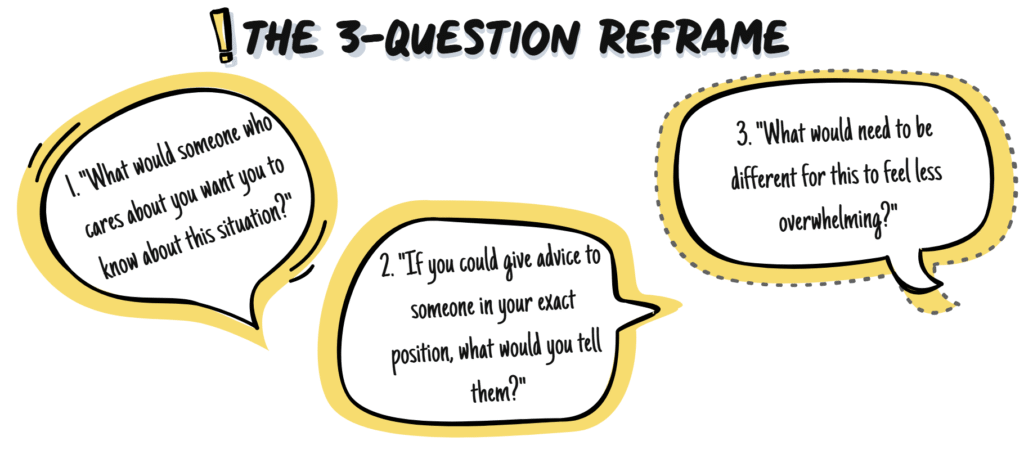
In essence these three questions bypass defensive responses by removing direct pressure allowing justice involved clients to share insights and identify solutions without feeling interrogated or judged
Looking Ahead
This month, we’re launching our Justice Involved Clients Treatment Mastery Series, diving deep into practical strategies that honor both accountability and healing. Because our clients deserve more than compliance—they deserve care that actually works.
Ready to transform your approach? Next month’s series begins with “Beyond Court Compliance: Harm Reduction with Mandated Clients”—where we’ll explore specific techniques that build engagement instead of resistance.
The justice-involved population represents one of our most underserved communities. When we get this work right, we don’t just change individual lives—we break cycles that have persisted for generations.
💛Stephanie | The Underrated Superhero
